Summary: Cambodia’s Water Festival (Bon Om Touk) runs from Monday 23 to Wednesday 25 November 2026, three national public holidays under Sub-decree 167; in 2027 it falls on 12–14 November. Held around the full moon of the Khmer lunar calendar, it marks the reversal of the Tonlé Sap river and the receding waters, with boat races, illuminated floats, the moon salute and eating ambok. In both 2025 and 2026 the main celebration in front of the Royal Palace in Phnom Penh was suspended, while the three holidays remained and provinces could hold their own events.
This guide covers the dates from 2023 to 2027, the festival’s origins and history, the scale of its traditions, how it compares with Thailand’s Loy Krathong and China’s Dragon Boat Festival, and what the holiday means for staffing and shipments at factories in Cambodia.
(Last updated: 27 October 2026)
What is the Cambodia Water Festival? 2026 at a glance
The Water Festival is Cambodia’s celebration of the Tonlé Sap river flowing back to the Mekong, held around the full moon of the Khmer lunar calendar. Like Khmer New Year and Pchum Ben, it is a three-day national holiday; in 2026 it runs from 23 to 25 November.
| Item | Details |
|---|---|
| Name | Water Festival (Khmer: Bon Om Touk) |
| 2026 dates | 23–25 November (Monday to Wednesday), three national public holidays |
| 2027 dates | 12–14 November (Friday to Sunday) |
| How the date is set | Full moon of the Khmer lunar calendar; holiday dates follow the government’s public holiday sub-decree (Sub-decree 167 for 2026) |
| Meaning | The Tonlé Sap flows back to the Mekong and the waters recede; the fishing season ends and the harvest approaches |
| Traditions | Boat races, illuminated floats and fireworks, the moon salute and eating ambok |
| 2026 arrangements | Main celebration in front of the Royal Palace suspended for a second year; three holidays remain and provinces and cities may hold their own events |
The festival’s older Khmer names mean “the canoe racing festival” and “the festival of floating lights”; the name “Water Festival” dates from the French protectorate. Cambodia has 21 public holidays in 2026 (International Labour Day and Visak Bochea both fall on 1 May), and Khmer New Year, Pchum Ben and the Water Festival each last three days.
When is the Water Festival in 2026? Dates from 2023 to 2027
The 2026 Water Festival runs from 23 to 25 November and the 2027 festival from 12 to 14 November. Because the date follows the full moon, it usually shifts by more than ten days from one year to the next.
| Year | Festival dates | Days | Phnom Penh main celebration |
|---|---|---|---|
| 2023 | 26–28 November | Sunday–Tuesday | Resumed for the first time since the pandemic |
| 2024 | 14–16 November | Thursday–Saturday | Held, with 348 racing boats |
| 2025 | 4–6 November | Tuesday–Thursday | Suspended; provinces held their own events |
| 2026 | 23–25 November | Monday–Wednesday | Suspended for a second year; provinces may hold their own events |
| 2027 | 12–14 November | Friday–Sunday | Subject to announcements at the time |
The festival follows the Khmer lunar calendar and is held around the full moon, so its Gregorian dates move every year. The 2026 dates come from Sub-decree 167, signed in September 2025; the 2027 sub-decree was signed on 16 September 2026 and provides 22 public holidays.
The weekday matters for working days lost. In 2026 the three holidays follow a Sunday, so a factory that rests on Sundays will stop for four consecutive days. In 2027 the festival falls from Friday to Sunday; since the 2021 amendment to the Labour Law, a public holiday that falls on a Sunday is no longer moved to another day.
The fourth quarter also includes King’s Coronation Day on 29 October, Independence Day on 9 November and Peace Day on 29 December. For the full calendar, see Cambodia’s 2026 public holidays.
Why is it called the Water Festival? The Tonlé Sap reversal
The festival celebrates the Tonlé Sap river flowing back. In the rainy season the swollen Mekong pushes water up the Tonlé Sap into the great lake; when the dry season begins, the water flows back to the Mekong, and the festival marks the receding waters.
The Tonlé Sap lake covers about 3,000 km² in the dry season and can expand to about 16,000 km² in the rainy season, roughly five times its size. The flood carries fish eggs and larvae into the lake, where the fish feed and grow; as the lake contracts, they migrate back to the Mekong to spawn.
According to a 2024 explainer by the Stimson Center, the Tonlé Sap is the world’s largest freshwater fishery, yielding about 500,000 tonnes of fish a year, and more than three million people live and fish on it. A 2019 Stimson article estimated that Cambodians get up to 70% of their protein from the lake’s catch. The sediment left behind as the water recedes also makes the riverbanks fertile, so the festival marks both the end of the fishing season and the coming harvest.
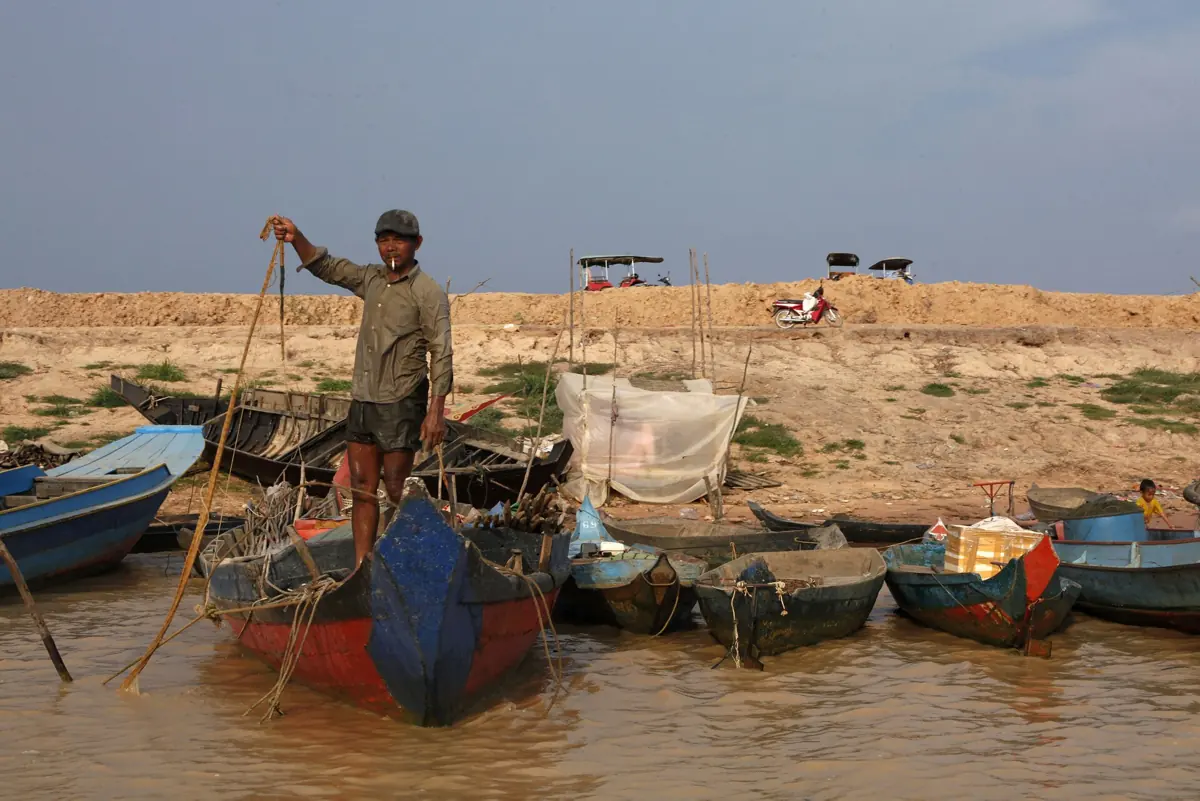
The flood pulse is not the same every year. Stimson’s 2019 analysis noted that the lake needs about six months of flooding to produce its full catch, and that in 2019 low rainfall and upstream dams shortened the flood season. The festival date follows the full moon, but the actual timing of the reversal varies from year to year.
History of the Water Festival: Angkor’s navy and the Bayon reliefs
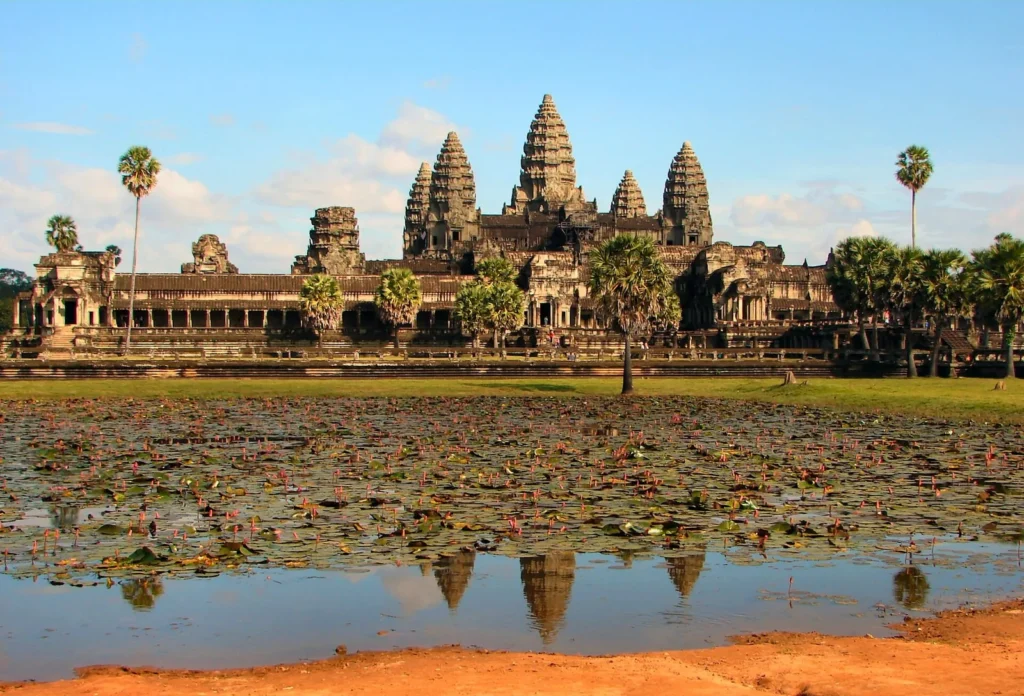
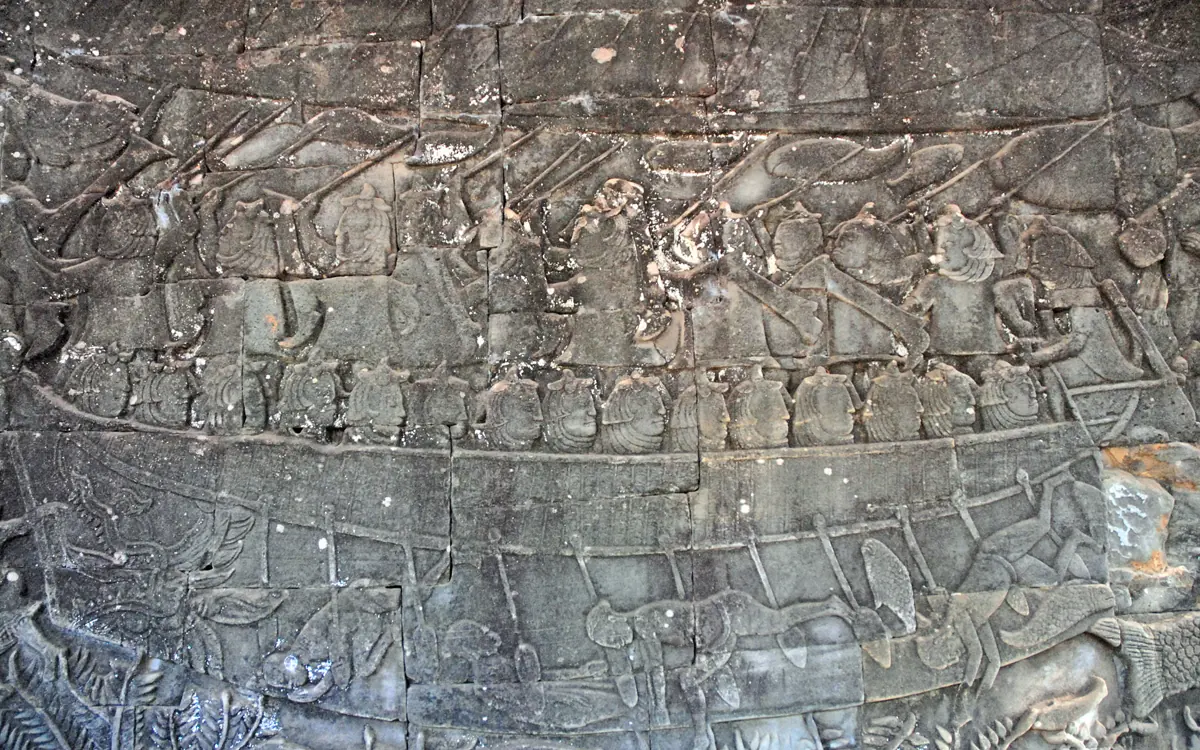
The festival’s origins are not settled. Some historians trace it to the 12th century, when the Angkorian king Jayavarman VII led a naval force that drove back the Cham, and the Bayon temple preserves carvings of naval battles on the Tonlé Sap from that era.
According to Wikipedia, a Cham force defeated the Khmer on the Tonlé Sap lake in 1177 and raided Angkor; between 1177 and 1181 Jayavarman VII led a Khmer army that drove out the invaders, and he was crowned in 1181. The naval battle is depicted on the walls of the Bayon and Banteay Chmar temples.
A relief on the eastern wing of the Bayon’s southern gallery shows Khmer and Cham forces fighting on the lake: the Cham soldiers wear tiered headdresses, the oarsmen sit in neat rows, and the scene also shows everyday life on the water.
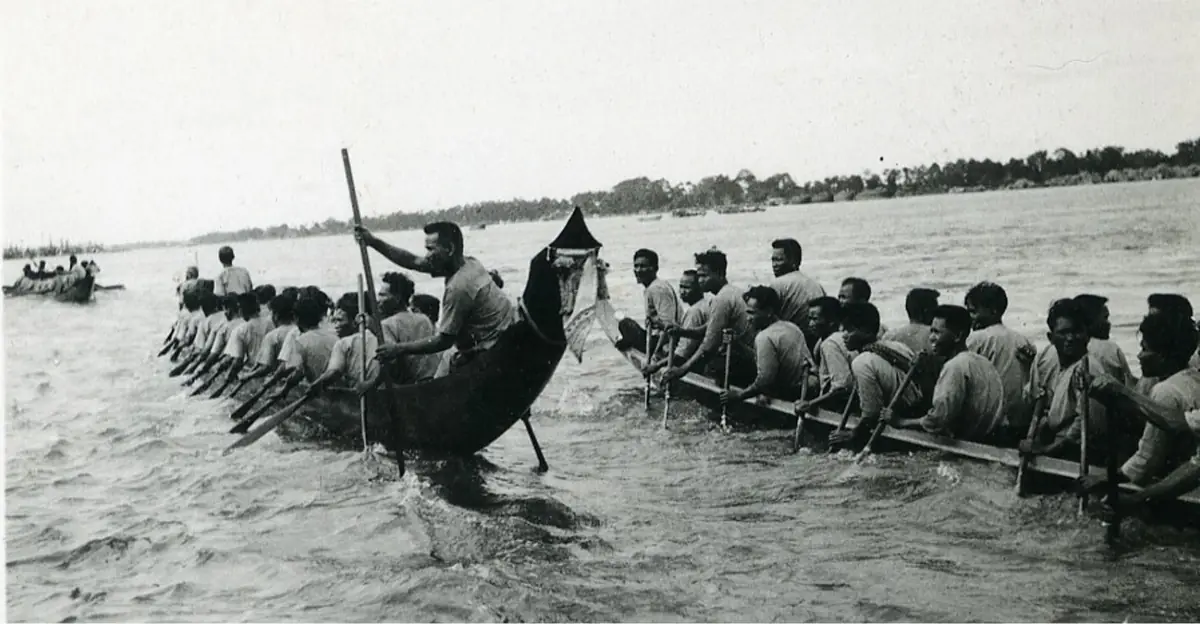
Cambodge Mag describes the Water Festival as Cambodia’s largest popular celebration. Below is a photograph of the boat racing from around 1935.
How is the Water Festival celebrated? Boat races, floats and the moon salute
The festival has three traditional parts: boat races by day, illuminated floats and fireworks at night, and the moon salute and ambok on the night of the full moon.
Boat races: hundreds of boats and over 20,000 rowers
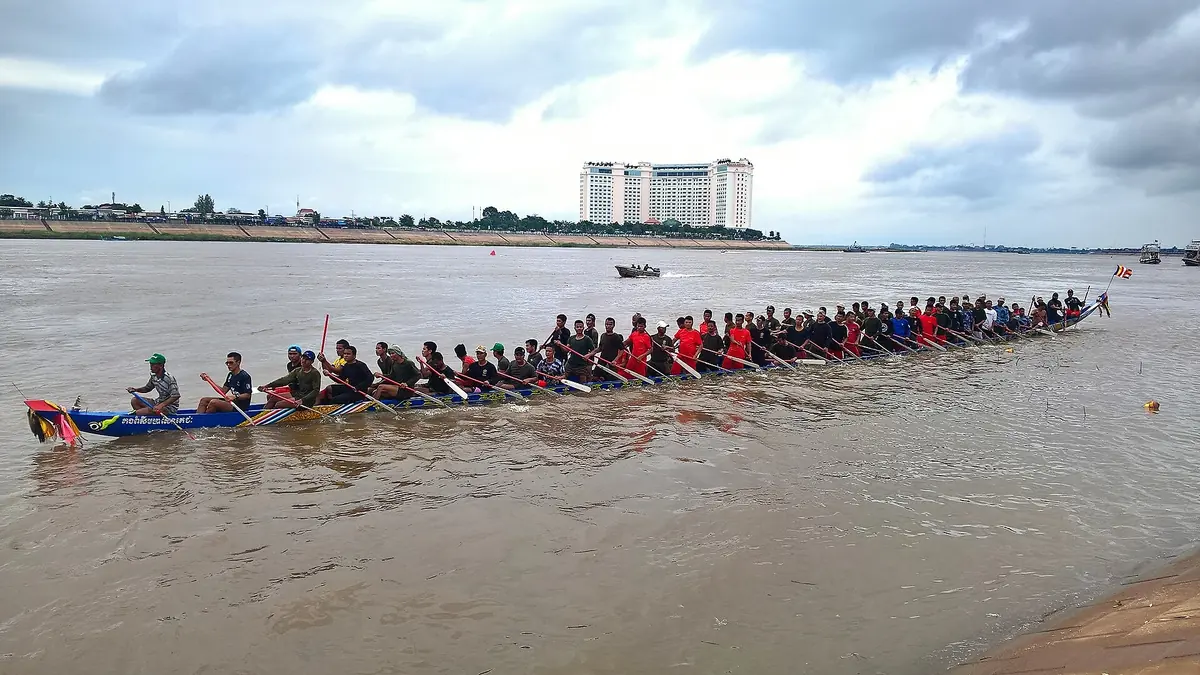
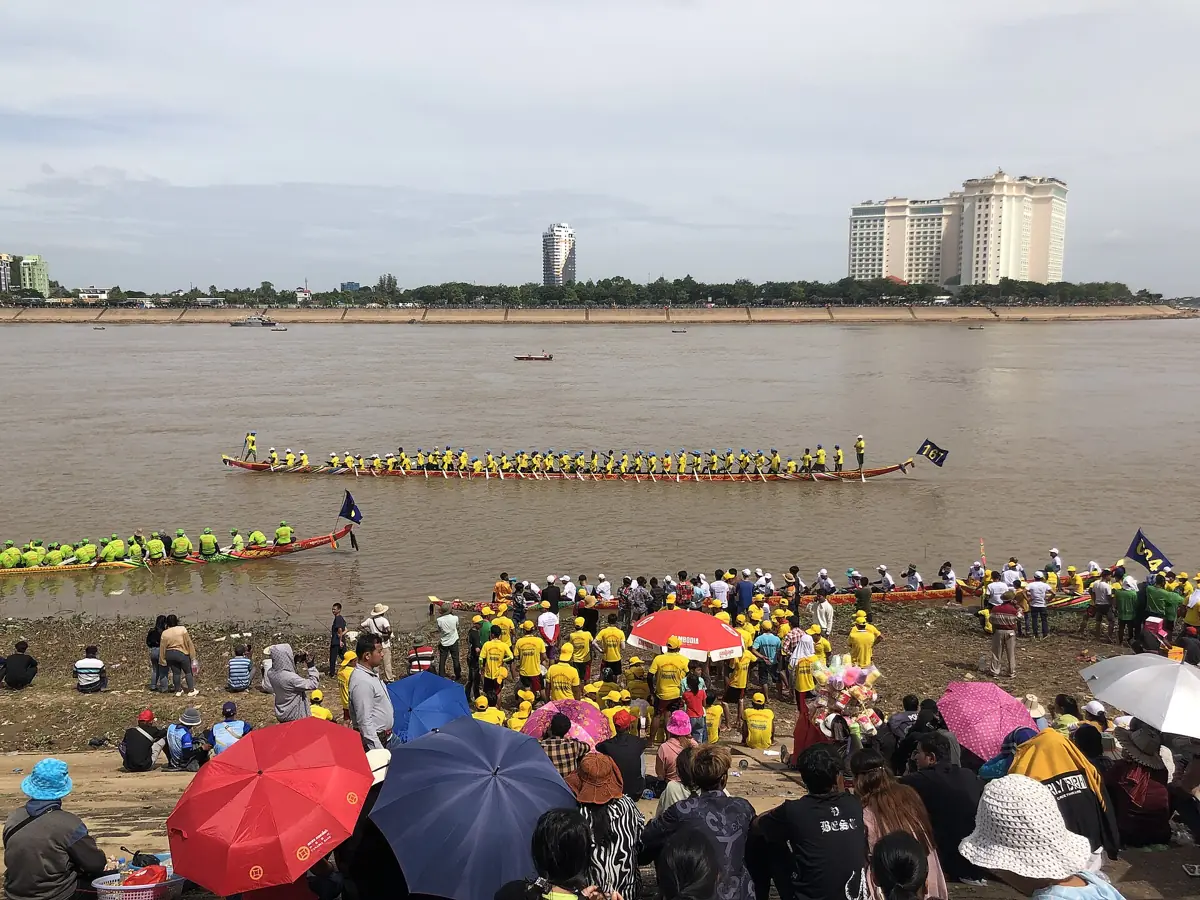
In Phnom Penh the main event is the afternoon boat racing on the Tonlé Sap in front of the Royal Palace. Boats represent provinces and pagodas, and central and local government agencies field teams as well.
| Year | Boats | Rowers | Other |
|---|---|---|---|
| 2023 | About 337 | About 20,417 | First festival in Phnom Penh since the pandemic |
| 2024 | 348 | 22,042 | 36 illuminated floats; more than 16,000 police deployed |
Illuminated floats and fireworks
After dark, floats decorated by ministries and institutions parade along the river and fireworks are set off; 36 illuminated floats took part in Phnom Penh in 2024. Fireworks and floats are concentrated in the capital.
The moon salute and ambok
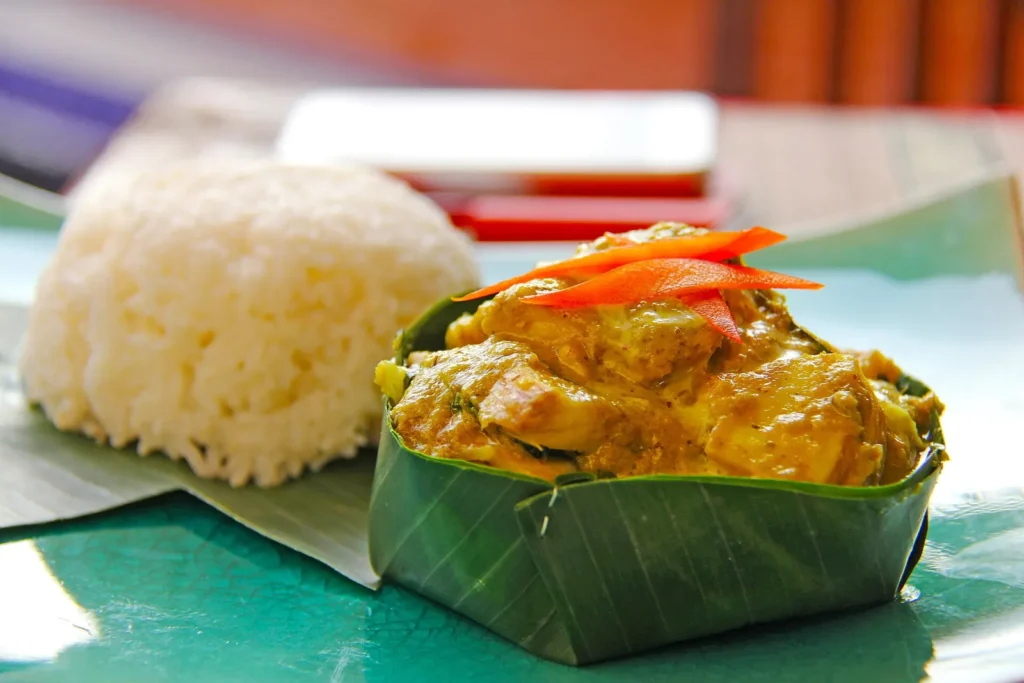
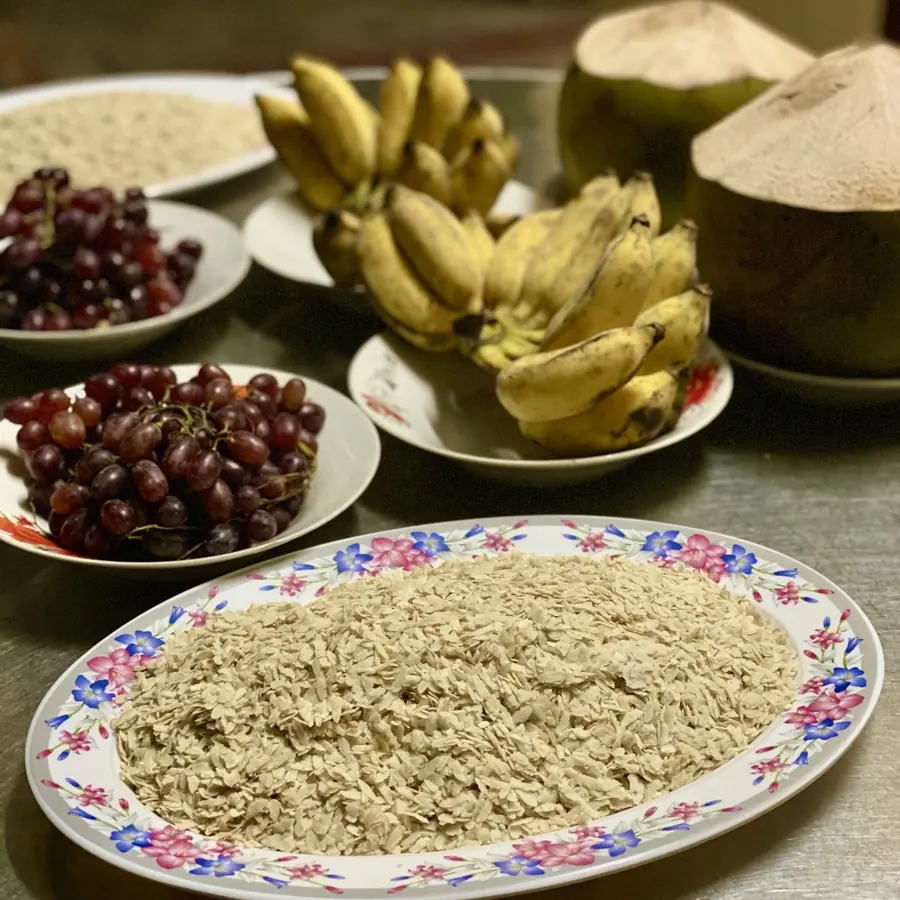
The moon salute (Sampeah Preah Khe) and eating ambok (Ak Ambok) traditionally take place on the full-moon night. Offerings include bananas, sweet potatoes, yams, coconuts and freshly pounded ambok, flattened rice made by pounding newly harvested glutinous rice with wooden pestles in a large mortar. In the ceremony young men and women line up in two rows and feed each other ambok, banana and coconut.
The Cambodia Daily has reported a Buddhist story behind the ritual: according to the tale, in a previous life the Buddha was a rabbit named Pouthesat who leapt into a fire on a full-moon night to offer himself to a hungry god.
Phnom Penh’s celebration suspended in 2025 and 2026: how the festival is marked
Agence Kampuchea Presse reported on 30 June 2026 that the government has suspended the 2026 Water Festival celebration on the Tonlé Sap in front of the Royal Palace. The three public holidays remain, and provinces and cities may hold their own events according to local tradition.
It is the second consecutive year that the main Phnom Penh celebration has been called off. For the 2025 festival (4–6 November), the suspension of the Phnom Penh events was announced in early September 2025; the three holidays were kept and provinces were allowed to organise their own festivities.
Cambodge Mag reported in November 2025 that there were no boat races on the Phnom Penh riverfront that year, while Kampong Cham, Battambang and Siem Reap held smaller regattas with traditional dance and music, and many Cambodians spent the holiday in the coastal towns of Kampot and Kep. Local arrangements in 2026 follow announcements by provincial and city authorities.
How does the Water Festival compare with Loy Krathong and the Dragon Boat Festival?
The Water Festival and Thailand’s Loy Krathong both fall around the full moon near the end of the traditional lunar year, usually in November. Its boat races resemble those of China’s Dragon Boat Festival, which falls on the fifth day of the fifth lunar month and has different origins.
| Festival | Country | Timing | Main traditions |
|---|---|---|---|
| Water Festival (Bon Om Touk) | Cambodia | Around the full moon of the Khmer lunar calendar, usually November | Boat races, illuminated floats, moon salute and ambok |
| Loy Krathong | Thailand | Full-moon night of the 12th Thai lunar month, usually November | Floating krathong on rivers and lakes |
| Dragon Boat Festival | China | Fifth day of the fifth lunar month | Dragon boat racing, eating zongzi |
Wikipedia’s Loy Krathong article lists Cambodia’s Bon Om Touk and Myanmar’s Tazaungdaing as festivals similar to Loy Krathong. For readers familiar with the Dragon Boat Festival, the boat races are the obvious link, but the timing, origins and rituals differ.
Living and travelling in Cambodia during the Water Festival
The three festival days are paid national holidays. On 24 November 2026 Vietnam also has a paid holiday, Vietnam Culture Day, so travellers and goods crossing at the Bavet–Moc Bai checkpoint are affected by holidays on both sides.
On 24 April 2026 Vietnam’s National Assembly designated 24 November as Vietnam Culture Day, a paid holiday, effective from 1 July 2026. In 2026 it falls on a Tuesday, in the middle of Cambodia’s Water Festival, so both countries are on holiday that day.
The suspension of the Phnom Penh celebration does not affect the three public holidays. Trips to or from Cambodia around the holiday, or overland crossings into Vietnam, follow the holidays and checkpoint operations announced by both countries for that year.
How should factories in Cambodia plan for the Water Festival? Staffing, pay and shipments
The three festival days are paid public holidays. A company that needs staff to work on them must meet the conditions and notification procedure of Ministry of Labour and Vocational Training Prakas 112/25.
| Topic | Rule or fact | Source |
|---|---|---|
| Holiday work | Only when work cannot be suspended, and only on a voluntary basis | Prakas 112/25 (2025-05-06) |
| Notification | At least three working days before the work, file documents and staff confirmation through the ministry’s LACMS system | Prakas 112/25 |
| Pay | Work on a paid holiday may be paid at the employee’s normal daily wage | Tilleke & Gibbins (2025-05-28) |
| Rotation and time off in lieu | Continuous operations may rotate holidays; otherwise the parties may agree on holiday work with time off in lieu, with records kept | Sub-decree 167 |
| Holidays on Sundays | A public holiday falling on a Sunday is no longer moved to another day | 2021 Labour Law amendment, Article 162 |
| Vietnam Culture Day | Vietnam is on holiday on 24 November 2026, during the Water Festival | Vietnam National Assembly resolution (2026-04-24) |
Under Prakas 112/25 of 6 May 2025, employees may be asked to work on a paid public holiday only when the work cannot be suspended, and only on a voluntary basis. At least three working days before the work starts, the company must file documents through the ministry’s online LACMS system, with a confirmation signed or thumbprinted by two-thirds of the staff representatives or more than half of the employees concerned.
For shipments, goods moving through the Bavet–Moc Bai checkpoint are affected by holidays on both sides. For orders that must be loaded before the end of November, confirming holiday operations with customs brokers and forwarders before the festival leaves room for container loading and clearance. The 2027 festival is eleven days earlier than in 2026, and February, July and August 2027 have no national public holidays, which also shapes production planning for the coming year.
For labour costs and rules in more detail, see our guide to Cambodia’s employment and labour laws and Cambodia’s minimum wage.
Manhattan Special Economic Zone is in Bavet City, Svay Rieng Province, about 6 km from the Bavet–Moc Bai international checkpoint. Customs and the government one-stop office, where the Ministry of Labour and Vocational Training has a desk, are inside the zone, so companies can check holiday-work requirements on site. To learn about factories and facilities in the zone, please contact our investment team.
Cambodia Water Festival FAQ
Q1: When is the Cambodia Water Festival in 2026?
It runs from 23 to 25 November 2026, Monday to Wednesday, three national public holidays under Sub-decree 167.
Q2: When is the Water Festival in 2027?
It falls on 12–14 November 2027, Friday to Sunday, eleven days earlier than in 2026, following the Khmer lunar full moon.
Q3: Is there a Water Festival celebration in Phnom Penh in 2026?
The main celebration in front of the Royal Palace is suspended for a second year; the holidays remain and provinces may hold events.
Q4: Why is it called the Water Festival?
It marks the Tonlé Sap river flowing back to the Mekong as the waters recede; the name dates from the French protectorate.
Q5: How big are the Water Festival boat races?
In 2024, 348 boats and 22,042 rowers raced in Phnom Penh, and 36 illuminated floats joined the night parade.
Q6: What do people eat at the Water Festival?
On the full-moon night people salute the moon and eat ambok, flattened new glutinous rice, with banana and coconut.
Q7: Is the Water Festival the same as Loy Krathong?
No. Both fall around a November full moon, but the Water Festival centres on boat races and Loy Krathong on floating krathong.
Q8: Can factories ask staff to work during the Water Festival?
Only when work cannot be suspended, on a voluntary basis, and after filing through LACMS at least three working days in advance.
For more on Cambodia’s festivals, history and customs, see Cambodian Culture. This article is compiled by the Manhattan Special Economic Zone editorial team; dates and figures are sourced and will be updated before each year’s festival.
Sources
- Andersen Cambodia (2025-10-08) | Cambodia Sets Official 2026 Public Holiday Schedule | https://kh.andersen.com/publications/cambodia-sets-official-2026-public-holiday-schedule/
- Cambodianess (2026-09-19) | Cambodia Has 22 Public Holidays in 2027 | https://cambodianess.com/article/cambodia-has-22-public-holidays-in-2027
- Agence Kampuchea Presse (2026-06-30) | 2026 Water Festival arrangements | https://www.akp.gov.kh/post/detail/374510
- Cambodianess (2026-07) | Cambodia Calls Off Phnom Penh Water Festival for Second Consecutive Year | https://cambodianess.com/article/cambodia-calls-off-phnom-penh-water-festival-for-second-consecutive-year
- Cambodge Mag (2025-09-04) | Water Festival in Phnom Penh Cancelled | https://www.cambodgemag.com/en/post/water-festival-in-phnom-penh-cancelled-due-to-cambodia-thailand-border-crisis
- Cambodge Mag (2025-11-06) | Bon Om Touk 2025: Phnom Penh Calm, Provinces Celebrate | https://www.cambodgemag.com/en/post/cambodge-bon-om-touk-2025-phnom-penh-calme-provinces-en-f%C3%AAte-1
- Cambodge Mag (2024-11-08) | Cambodia: Tradition about the Water Festival, Bon Om Teuk | https://www.cambodgemag.com/en/post/cambodia-tradition-about-the-water-festival-bon-om-teuk
- The Cambodia Daily (2023-11-27) | Cambodia’s Water Festival Returns after 3-Year Hiatus | https://english.cambodiadaily.com/2023/11/27/cambodias-water-festival-returns-after-3-year-hiatus-due-to-pandemic/
- CamboJA (2024-11-13) | All Systems in Place for Annual Water Festival Boat Race in Phnom Penh | https://cambojanews.com/all-systems-in-place-for-annual-water-festival-boat-race-in-phnom-penh/
- Office Holidays (accessed 2026-10-27) | Water Festival Ceremony in Cambodia (dates by year) | https://www.officeholidays.com/holidays/cambodia/water-festival-ceremony
- WEPA (accessed 2026-10-19) | Cambodia: State of Water Environmental Issues | https://wepa-db.net/archive/policies/state/cambodia/overview1_4.htm
- Stimson Center (2024) | Mekong Floodpulse | https://www.stimson.org/2024/mekong-floodpulse/
- Stimson Center (2019) | Cambodia’s Tonle Sap Lake Recedes Earlier than Normal | https://www.stimson.org/2019/cambodias-tonle-sap-lake-recede-earlier-than-normal/
- Wikipedia (accessed 2026-10-27) | Battle of Tonlé Sap | https://en.wikipedia.org/wiki/Battle_of_Tonl%C3%A9_Sap
- Wikipedia (accessed 2026-10-27) | Loy Krathong | https://en.wikipedia.org/wiki/Loy_Krathong
- The Cambodia Daily (2014-11-08) | Moon salute and ambok | https://english.cambodiadaily.com/2014/11/08/clergy-strives-to-keep-festival-traditions-alive/
- Tilleke & Gibbins (2025-05-28) | Cambodia Issues New Work Regulations on Overtime, Paid Holidays, and Weekly Days Off | https://www.tilleke.com/insights/cambodia-issues-new-work-regulations-on-overtime-paid-holidays-and-weekly-days-off/
- KPMG Cambodia (2022-01) | Amended Cambodia Labour Law | https://assets.kpmg.com/content/dam/kpmgsites/kh/pdf/technical-update/2022/kpmg-tu-amended-cambodia-labour-law.pdf
- Viet Nam News (2026-04-24) | Parliament Designates Nov 24 as Viet Nam’s Culture Day, a Public Holiday | https://vietnamnews.vn/politics-laws/1780143/parliament-designates-nov-24-as-viet-nam-s-culture-day-a-public-holiday.html