


How to Assess a Dyeing and Finishing Plant in Cambodia: EIA Classes, Wastewater Discharge Standards and Compliance Costs
Cambodia imported US$5.428 billion of fabric in 2025, 87.8% of it from China. Garment capacity is already in Cambodia, but dyeing and finishing has not followed, not for lack of orders but because of the environmental threshold of wet processing. Under Prakas 3591, issued by Cambodia’s Ministry of Environment in May 2025, weaving and dyeing factories of any size must submit an Initial Environmental Impact Assessment (IEIA), reviewed within 60 working days, while pure garment sewing needs only an Environmental Protection Agreement (EPA).

Is Cambodia Viable for Medical Supplies Manufacturing? Regulations, Certification and Export Routes for Gloves, Gowns, Masks and Syringes
After the four-year review, US Section 301 tariffs on Chinese medical supplies rose sharply: medical gloves went to 50% in 2025 and 100% from January 2026, syringes and needles have been at 100% since September 2024, and certain masks and respirators rose to 50% in 2026. China still supplied 39% of US medical glove imports in 2024, and that capacity is now looking for new production sites.

Cambodia ODI Filing for Chinese Investors: NDRC, MOFCOM and Foreign-Exchange Steps Explained
Cambodia ODI filing is the step that most often stalls a Chinese company’s factory project in Cambodia, and the delay usually comes from the Chinese side rather than the Cambodian one. Cambodia has diplomatic relations with China, is not under UN sanctions, and manufacturing is not on the sensitive-industry list, so projects qualify for the lighter record-filing regime rather than approval. Three steps are required in China: an NDRC project record, a MOFCOM filing that issues the Enterprise Overseas Investment Certificate, and foreign-exchange registration at a bank, after which funds can be remitted legally. The whole process usually takes one to three months.

Cambodia Electroplating and Surface Treatment Supply: The Real Gap, Alternatives and Timing
Cambodia electroplating and surface-treatment capacity remains one of the clearest gaps in the country’s manufacturing supply chain. Most hardware, lighting, sanitaryware and some auto-parts and consumer-electronics products need plating or another surface finish before they can ship, yet Cambodia still has no electroplating trade association and no dedicated park that treats plating wastewater centrally. The reason is not a lack of demand: plating only pays off when wastewater is treated at park scale, which a single factory can rarely afford on its own.

Cambodia Certificate of Origin and Local Content Practice: Is the 35% Threshold Still Applicable?
Anyone preparing a Cambodia certificate of origin will have heard of the “35% local content rule”. It comes from the origin threshold of the US Generalized System of Preferences (GSP): the cost of Cambodian-produced materials plus direct processing cost must reach at least 35% of the appraised value of the goods, with qualifying ASEAN member materials allowed to be cumulated. But that threshold is not currently the gateway to any preferential tariff. US GSP lapsed at the end of December 2020, Congress has not completed reauthorisation in the years since, and Cambodian goods entering the United States cannot obtain duty-free treatment on that basis today.

Cambodia’s 2029 LDC Graduation: EBA Countdown, Transition Period and Industrial Response
The date for Cambodia LDC graduation is settled: 19 December 2029, under UN General Assembly resolution A/79/L.49 adopted in December 2024. The EU’s Everything But Arms arrangement applies only to least developed countries, so it winds down during a post-graduation transition. If garments then move to standard GSP, the average tariff into the EU rises from zero to about 8.8%; with no GSP eligibility at all, it returns to the MFN rate of roughly 12%. Cambodia is pursuing GSP+, which would hold the rate at zero but requires ratifying and implementing 27 international conventions.

What Should Be Confirmed in a Cambodia Factory Setup Evaluation? A Checklist from Market Access to Production Launch
A cambodia factory setup evaluation should not begin with cost. It begins with market access: the tariffs and rules of origin that apply to the product in the destination market decide whether this origin can be used at all. Only once that is settled do the comparison against Vietnam and Thailand, the total cost model, the administrative sequence and the annual obligations after production starts come into play. The common failure is to compare land prices and wages without first checking which measures apply to the company’s own tariff code – in the wrong order, even a meticulous cost table can be discarded whole.

How to Negotiate Factory Buildings and Industrial Land in Cambodia
The hard part of a cambodia factory lease is not the headline price but the fact that competing quotes cannot be compared at all. One is priced per square metre per month, another per hectare over a 40-year term; one bundles utility hook-up, another bills it separately; one states an annual escalation rate, another is silent. Cambodia has 28 special economic zones in operation, each with its own pricing conventions and contract templates, and the same floor area can differ by tens of percent in annual cost once the bases are aligned.
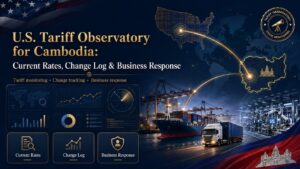
US Tariff Observatory for Cambodia: Current Rates, Change Log and Business Response
On US tariffs, Cambodia currently sits at a country-level surcharge of 10% under the forced-labor Section 301 measures that took effect on 24 July 2026. The same package covers 60 economies: China, Vietnam, Brazil and 35 others are at 12.5%, while Cambodia sits in the 10% band alongside Bangladesh, India, Indonesia and Malaysia.
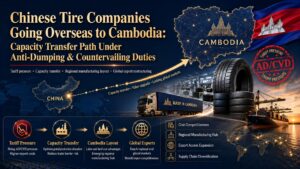
Cambodia Tire Manufacturing: Capacity Transfer Under US AD/CVD Duties
Summary: Cambodia tire manufacturing has moved from a fallback option to one of the main destinations for Chinese tire capacity. By the end of 2025, nine Chinese tire companies were in production or under construction in the country; Cambodian tire exports reached USD 1.38 billion in 2025, up 57.9% year

The Cambodia Factory Setup Process and the SEZ One-Stop Window: Time Is Cost
Summary: In the Cambodia factory setup process, what slows a project down is rarely a single approval. It is the dependency between four parallel administrative tracks: company formation (three-stage registration with the Ministry of Commerce, the General Department of Taxation and the Ministry of Labour), investment status (a Qualified Investment
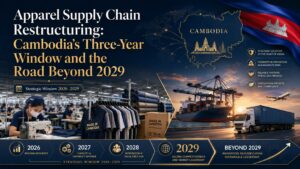
Apparel Supply Chain Restructuring: Cambodia’s Three-Year Window and the Road Beyond 2029
Summary: In the current wave of apparel supply chain restructuring, Cambodia is one of the largest recipients of relocating capacity. Garment, footwear and travel goods (GFT) exports hit a record USD 15.8 billion in 2025, more than half of the country’s merchandise exports, across 1,867 factories employing roughly 1.1 million

Cambodian Socio-Cultural Environment: A Glimpse into the Diverse Charms of an Asian Treasure Nation
Cambodia is a unique and diverse country with a rich and diverse social and cultural environment. An in-depth understanding of Cambodian society and culture reveals ways of life.
Cambodia Corporate Income Tax and QIP Incentives: How Many Years, and What Is Exempt?
Summary: Cambodia corporate income tax has a standard rate of 20%, and companies granted Qualified Investment Project (QIP) status can obtain an income-tax holiday of up to nine years — usually the first reason a company looks at Cambodia. Three things are widely misunderstood in practice. First, the nine years
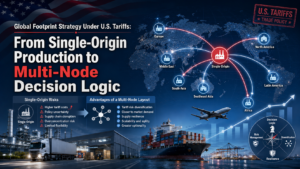
Global Manufacturing Strategy Under US Tariffs: From One Site to Multiple Nodes
Summary: A global manufacturing strategy built on one tariff rate failed in 2026. US tariffs that year taught manufacturers an expensive lesson: any investment decision built on a single tariff rate can be overturned within months. On 20 February the Supreme Court struck down IEEPA reciprocal tariffs; a 10% global

Outdoor Gear Manufacturing in Cambodia: Category Fit, Tariffs and Component Supply
Summary: Outdoor gear manufacturing covers tents, sleeping bags, backpacks, sleeping pads, folding furniture — is a sewing- and assembly-intensive export industry. China remains the main production base, where leading OEMs supply Coleman and The North Face, export the overwhelming majority of output, and have already built plants in Vietnam. For
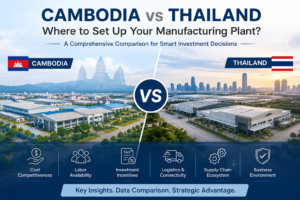
Cambodia vs Thailand Manufacturing: Single or Dual Node?
Cambodia vs Thailand manufacturing is not a choice between a lower and a higher tier — the two are distinct supply-chain organization modes that can each stand alone or be combined. Thailand’s value lies in multi-industry local integration, engineering services and market networks; the Cambodian border park represented by MSEZ offers a mature regional-coordination platform through long operation, park infrastructure, Chinese-language administration and clearance, southern-Vietnam restocking and an export-manufacturing cluster.
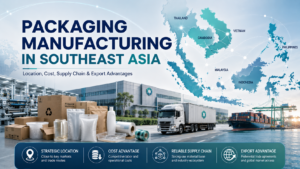
Packaging in Southeast Asia: What Business Can Cambodia Take On?
Packaging in Southeast Asia is not, first of all, a question of comparing wages or factory rent — it is about confirming whether downstream orders form a stable service radius. Cartons, color boxes, hang tags, labels, inserts, PE/PP bags, stretch film and cushioning materials build near-field value through fast proofing, revisions, reorders and short lead times; food-contact, high-barrier, pharmaceutical and medical packaging can also be evaluated, but only once orders, cleanroom conditions, testing, traceability and certification are in place.

Cambodian Political & Economy Overview
If you are interested about Cambodian Political & Economy overview, you must take a detail look at this aticle. We will break down all the necessary information for you.

Mastering Cambodia’s Employment and Labour Laws: A Comprehensive Guide for Employers and Employees
Cambodia Labour Law 2026: Rates & Rules at a Glance Updated for 2026 — the key statutory figures employers need before hiring in Cambodia. Full detail follows in the guide below. Item 2026 position Note Minimum wage (GFT sector) US$210/month (regular), US$208 (probation) Effective 1 Jan 2026, Prakas 214/25; statutory

Renting vs. Building a Factory in Cambodia: Cost, Timeline & Decision Framework
When landing capacity in Cambodia, a factory usually comes from one of three routes: renting a ready-built standard factory (about USD 2–5 / ㎡ / month, leases commonly 5–10 years), asking the park to build to specification and then leasing it, or long-leasing land and building your own factory.

Furniture & Home-Building Materials Manufacturing in Cambodia: Anti-Dumping, Materials & EUDR
In earlier industry analyses, lighting could avoid most of its U.S. tariffs simply by “moving out of China,” because it is mainly hit by the China-specific Section 301. Furniture and home-building materials—especially wooden furniture, cabinets and mattresses—are different: the U.S. trade barriers they face are unusually heavy, and not aimed at China alone.

Complete Analysis of Overseas Factory Setup Risks: Six Risk Categories, Real Cases, and Systematic Responses
Moving production capacity overseas can diversify tariff and geopolitical risks, but “moving out” itself also brings a full set of new risks. Industry participants often say, “not going overseas may mean being left behind, but going overseas blindly can also end in failure.”

Analysis of Lighting Companies Setting Up Factories in Cambodia: Tariff Logic, Component Assembly, and Operating Costs
In recent years, the relocation of lighting production has differed from hardware in one important respect: lighting products exported to the United States are mainly affected by the U.S. Section 301 tariff on China(List 3, 25%).

Bavet, Cambodia: The Border Manufacturing Hub Next to Vietnam (2026)
Bavet is the largest city in Cambodia’s Svay Rieng province and the country’s busiest land border gateway to Vietnam — facing Moc Bai (Tay Ninh province) with Ho Chi Minh City about two hours away. It is Cambodia’s densest manufacturing border corridor, hosting eight special economic zones in one municipality, packed with garment, bag, bicycle and electronics factories.

Business Registration in Cambodia (2026): 5 Steps, Costs & Required Documents
Are you looking for info about business registration in Cambodia? Starting a business in Cambodia can be an exciting and rewarding experience, but it requires careful planning and preparation. In my experience as a Cambodia business specialist, one of the most important steps in establishing a business in Cambodia is registering it with the relevant authorities.

Special Economic Zones of Cambodia: A Complete Guide
Special Economic Zones (SEZs) have become a common feature in various economies around the world, providing businesses with an environment that offers unique benefits and regulations to encourage investment and growth. In Cambodia, SEZs were first approved in 2005, with implementation beginning in 2006. The Cambodian government designated 22 SEZs within its borders, providing businesses within each zone with fiscal incentives and streamlined administrative services.

Cambodia Tax Guide 2026: Corporate Income Tax, VAT & Investor Incentives
Discover the ins and outs of taxes in Cambodia with our comprehensive guide. Gain valuable insights into the country’s taxation laws, regulations, and practices. Whether you’re a business owner, expatriate, or simply curious about Cambodia’s tax system, our expertly crafted resource will provide you with the knowledge you need to navigate the world of taxes effectively. Explore everything from income tax to value-added tax and make informed decisions for a successful financial journey in Cambodia.

Is Cambodia TAA Compliant? Trade Agreements Act Guide for Manufacturers (2026)
The Trade Agreements Act (TAA) is an international trade legal framework aimed at establishing a fair and beneficial trading environment among countries. One of its main objectives is to reduce or eliminate tariffs, which is the most well-known aspect of the TAA. However, despite the TAA’s aim to lower tariffs and promote fair trade, tariff disparities still exist between different countries.

Cambodia Public Holidays 2026: Khmer New Year Dates & Factory Planning
Updated July 2026 Quick answer: Khmer New Year 2026 falls on April 14–16 (Tuesday to Thursday), a 3-day public holiday. Together with Pchum Ben (October 10–12) and the Water Festival (November 23–25), Cambodia observes 21 public holidays in 2026 — factory operators should plan shifts and shipments around the three

Business license in Cambodia
Cambodia has made remarkable progress in attracting foreign investment, driving significant economic growth over the past two decades.
Cambodia Import Duties & Customs Clearance (2026): Rates, Process & QIP Exemptions
Customs officials are responsible for verifying customs declarations and inspecting items to ensure compliance with customs procedures and relevant laws and regulations. CamControl (General Directorate of Cargo Inspection of the Ministry of Commerce of Cambodia) officials are responsible for checking the quantity, quality and safety of the goods, while taking measures to prevent fraud, and charging fees for the inspection.

Cambodia EBA Explained: Single Transformation, Coverage, and the 2029 Transition
Article Summary:EBA (Everything But Arms) is a unilateral preference the EU grants to Least Developed Countries (LDCs): every product except arms enters the EU market duty-free and quota-free. For labour-intensive industries such as apparel, footwear and bags operating in Cambodia, EBA’s key value lies in its “single transformation” rule of

Hardware & Metal Manufacturing in Cambodia: Materials, Export Routes & Operating Costs
Article Summary:Over the past two years, setting up a hardware factory in Southeast Asia has become a popular option. Unlike apparel’s mature clusters, hardware (metal products) is still a nascent industry in Cambodia, and metal raw materials are almost entirely imported — in 2023 Cambodia imported about US$636 million in

Cambodia Factory Rental Costs (2026): Industrial Land, Long Leases, and SEZ Utilities
How much do factory rental and industrial land cost in Cambodia? Can foreign investors buy land? Using 2026 data, this article explains the legal routes for foreign investors to secure industrial land, the cost structures of ready-built factories, build-to-suit factories, and land lease plus self-built plants, supporting services such as utilities and wastewater treatment, and the value-for-money comparison with Vietnam.
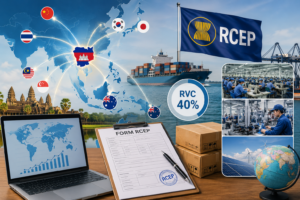
Export Advantages under RCEP: Cambodia Manufacturing Benefits and Filing Requirements
What export advantages does RCEP bring to Cambodia-based manufacturing? Using 2026 data, this article explains RCEP’s cumulative rules of origin, beneficiary sectors and export markets, key filing requirements for certificates of origin, and how RCEP complements the EU’s EBA and the U.S. market. It also explains why RCEP is a more durable advantage after Cambodia’s expected LDC graduation in 2029.
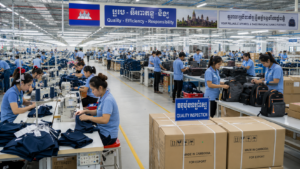
Setting Up an Apparel & Bags Factory in Cambodia: From Tariff Preferences to Supply-Chain Strategy
Why do apparel and bags manufacturers choose Cambodia? Using 2026 data, this article analyzes the scale of the GFT sector, EU EBA and RCEP tariff preferences, the CMT supply-chain model and labor costs, and flags how to prepare for the 2029 LDC graduation — to help apparel and bags companies evaluate a Cambodian site.
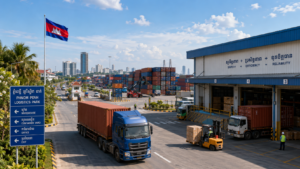
Cambodia–Vietnam Cross-Border Logistics: Linking the Ho Chi Minh City Supply Chain to a Cambodian Factory
How should cross-border logistics be designed for a factory in Cambodia? This article breaks down the Bavet–Moc Bai corridor, inbound and outbound routes, ACTS transit clearance and origin compliance, and explains why proximity to the Ho Chi Minh City ports (about 70–140 km) is the most underrated operational advantage of a “Vietnam Plus One” setup.

Cambodia Manufacturing Labor Cost & Workforce Supply Analysis
Cambodia’s statutory minimum wage in the garment sector is US$210/month in 2026, and recent increases have clearly moderated (only about 1% in 2026), giving manufacturers a rare degree of labor-cost predictability. In regional terms, Cambodia’s minimum wage is clearly below China, Thailand and Indonesia, and on a par with Vietnam’s Region I; its employer statutory social burden of only about 5.4% — far below Vietnam’s roughly 22.5% — is a key hidden cost advantage.
Cambodia vs Vietnam for Manufacturing: Cost, Tariffs and Supply Chain
This article compares the two transparently across four dimensions. On tariffs, Cambodia’s 10% and Vietnam’s 12.5% country tariffs (from July 24, 2026) leave a narrow gap; origin scrutiny is the key variable. On cost, the assumption that “Cambodia’s wages are significantly lower” no longer holds in 2026 — statutory minimum wages in Vietnam’s Region I and in Cambodia have converged. As a trend, a growing share of manufacturers adopt a combined “Vietnam plus Cambodia” configuration rather than an either-or choice.
From China Plus One to China Plus N: Cambodia’s Real Position in the 2026 Multi-Node Era
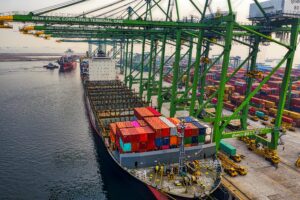
“China Plus One” has shaped global supply-chain diversification thinking for nearly eight years since the US–China tariff disputes began in 2018. By 2026, however, the question front-line buyers ask is no longer “should we leave China?” but “which combination of countries should make up our supply chain?”
China’s Manufacturing Shift to Southeast Asia: Key Drivers in 2025–2026
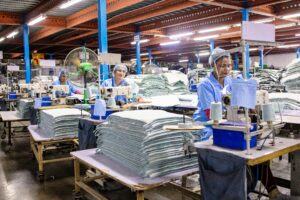
China’s manufacturing shift to Southeast Asia is not driven by any single factor; it is the cumulative effect of four forces — tariffs and geopolitics, structurally rising production costs, trade-agreement access, and the need for supply-chain resilience.
Cambodia’s Tiered EIA System: Using the EPA Fast Track to Set Up Light-Industry Operations
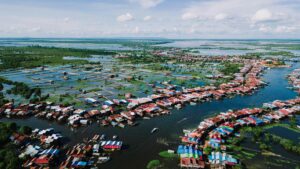
As both international ESG standards and the environmental rules of host countries tighten, Cambodia’s Ministry of Environment (MoE) has modernized its environmental impact assessment (EIA) regime. Prakas No. 3591 — issued on 6 May 2025 and in force from 6 June 2025 — sorts development projects into three control tiers (EPA, IEIA and FEIA), each with a statutory review limit of 30, 60 and 90 business days respectively.

2026 Cambodia’s QIP Goes Online: How the cdcIPM System Lowers Compliance Costs
A QIP is a special status the Cambodian government grants to encourage investment in priority sectors such as manufacturing, infrastructure, green energy and high technology.
To attract more foreign direct investment and improve the business environment, the Council for the Development of Cambodia (CDC) launched the “cdcIPM” online investment project management system on 27 November 2024, and added e-Signature and e-Stamp functionality from July 2025.
Important Setting Points for Accurate Clothing Manufacturing
In the highly competitive apparel manufacturing market, finding a niche and accurately targeting the masses is a key factor in becoming a winner. It is important to make the transition and be well prepared before entering fashion photography.

Key Steps and Tips for Embarking on the Road to Apparel Manufacturing
The apparel manufacturing business encompasses the design, production and distribution of apparel products, including raw material sourcing, cutting, finishing and quality control. The industry is diverse, with supply chain management and quality control capabilities that bring value and employment opportunities to the fashion industry.

From Idea to Reality: Establishing Your First Factory
Starting your own factory is an exciting adventure full of potential. You can provide high-quality products and respond quickly to market needs.
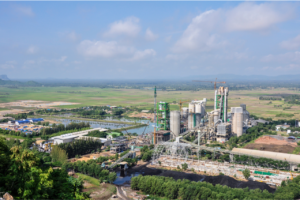
Opportunity to open up emerging markets by setting up factories in Cambodia
近年来,柬埔寨在经济发展方面取得惊人的成就,其中工厂设立是重要的驱动力。在柬埔寨设立工厂能够享受廉价劳动力、便利贸易政策和优越地理位置带来的种种好处。

Infrastructure magic in Cambodia: fuelling economic take-off and sustainable development!
Infrastructure development is vital to economic development and is seen as one of the keys to revitalising a country’s economy. The aim is to provide basic public services, promote economic growth, social development and improve the quality of life, making it a key indispensable project for the future. Infrastructure development is vital to economic development and is seen as one of the keys to revitalising a country’s economy. The aim is to provide basic public services, promote economic growth, social development and enhance the quality of life, and it is a key indispensable project for the future.

The current energy situation and public utilities in Cambodia
Cambodia’s energy industry has made some progress in recent years. The country’s energy sources mainly include coal, natural gas, hydropower, solar energy and biomass.