
Yang Ke Cheng, the Chairman of Mede Group, is a pioneer of the New Southbound Policy. As early as 1988, when Taiwanese businessmen were rushing to invest across the strait, Yang Ke Cheng chose the Philippines as his entrepreneurial base. Later, he ventured into Cambodia, even revitalizing the hometown of Prime Minister Hun Sen and developing the Manhattan Economic Zone along the Cambodia-Vietnam border.
After graduating from the Department of International Trade at National Chengchi University, Yang Ke Cheng initially worked at Hua Cheng Consulting Company, an affiliate of Ernst & Young. Later, he spent ten years overseeing international marketing at a domestic textile and garment factory before deciding to venture out on his own. Since the government had not yet formally opened up investment opportunities for businesses to go to mainland China at that time, after careful evaluation, he made the decision to establish a factory in the industrial zone of Bataan Island in the Philippines.
Despite the fact that wages in the Philippines were 40% higher than mainland China at that time (approximately $100/month), Yang Ke Cheng’s strategy proved effective. He focused on producing medical textile products such as masks, bandages, protective clothing, and related medical consumables, thereby differentiating himself from the limited quota restrictions on general textile items. This industrial route decision allowed his business to smoothly expand into the US market, generating revenue of nearly $3 million in the first year of entrepreneurship.
In 1997, during the outbreak of the Asian financial crisis, it unexpectedly provided an opportunity for Mede Group to focus on its core business and rise. The following year, Mede Group successfully went public in Singapore, becoming the fourth Taiwanese-funded company to be listed there at the time. It revitalized the factories in the hometown of Cambodian Prime Minister Hun Sen.
Around the time of the listing in Singapore, Yang Ke Cheng noticed that the quota for medical textile products in the Philippines was being affected by competition from mainland China. As a result, he began searching for alternative production bases in Southeast Asia.
He set his sights on a 23-hectare abandoned factory located in Kampong Cham Province, Cambodia, just over 100 kilometers from Phnom Penh. This factory had originally been donated by mainland China. Despite the lack of electricity in Cambodia at that time, the site possessed basic infrastructure such as power supply and water, which had been inactive due to the prolonged period of internal conflict.
In less than half a year, Yang Ke Cheng successfully revitalized this abandoned factory that had been idle for over a decade.
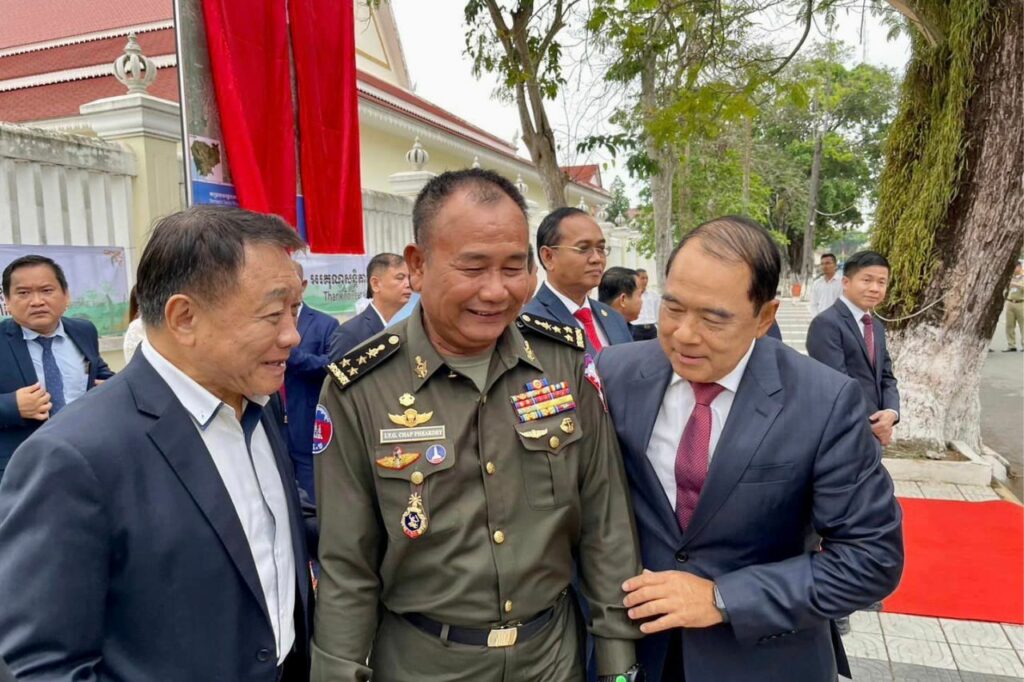
Ponhea Krek Province is the hometown of Cambodian Prime Minister Hun Sen, and his father had previously served at this factory. Prime Minister Hun Sen was delighted by Yang Ke Cheng’s successful revitalization of the hometown factory, and he personally attended the ribbon-cutting ceremony when the factory commenced operations.
Ponhea Krek Factory in Cambodia
The Ponhea Krek Factory in Cambodia currently employs over four thousand staff, making it the largest enterprise in Ponhea Krek Province and the largest production base among Mede Group’s factories across Asia. This has propelled Mede Group to become the world’s third-largest manufacturer of medical textile products. In 2003, when the SARS epidemic emerged, Mede Group became an integral part of the international epidemic prevention system.
In 2003, the severe outbreak of the SARS epidemic led to a high demand for masks. Mede Group promptly assisted (via air transportation) the governments of Taiwan and Singapore in establishing the necessary protective systems, including protective clothing and masks. Additionally, they donated 400,000 masks to elementary and secondary schools in the Taipei area, earning Mede Group a reputable name. Currently, Mede Group has been assisting the government for over a decade in establishing the supply and management system for medical consumables required for the government’s defense and protection system, which covers a five-year period. During the Ebola virus outbreak in Africa, more than half of the protective clothing and related supplies used were products manufactured by Mede Group.

A Gift from the Sky
By making good use of local resources and implementing a management style focused on kindness, Yang Ke Cheng unexpectedly received a “gift from the sky” – the opportunity to develop and operate the Manhattan Economic Zone located on the Cambodia-Vietnam border.
Around 2004, mainland China and Vietnam faced a crisis as the European Union imposed anti-dumping duties on various products such as sports shoes, bicycles, screws, nuts, and candles destined for the European market. Taiwanese business owners in related industries were eager to establish industrial zones along the Cambodia-Vietnam border or within Cambodia itself as a means to circumvent these duties.
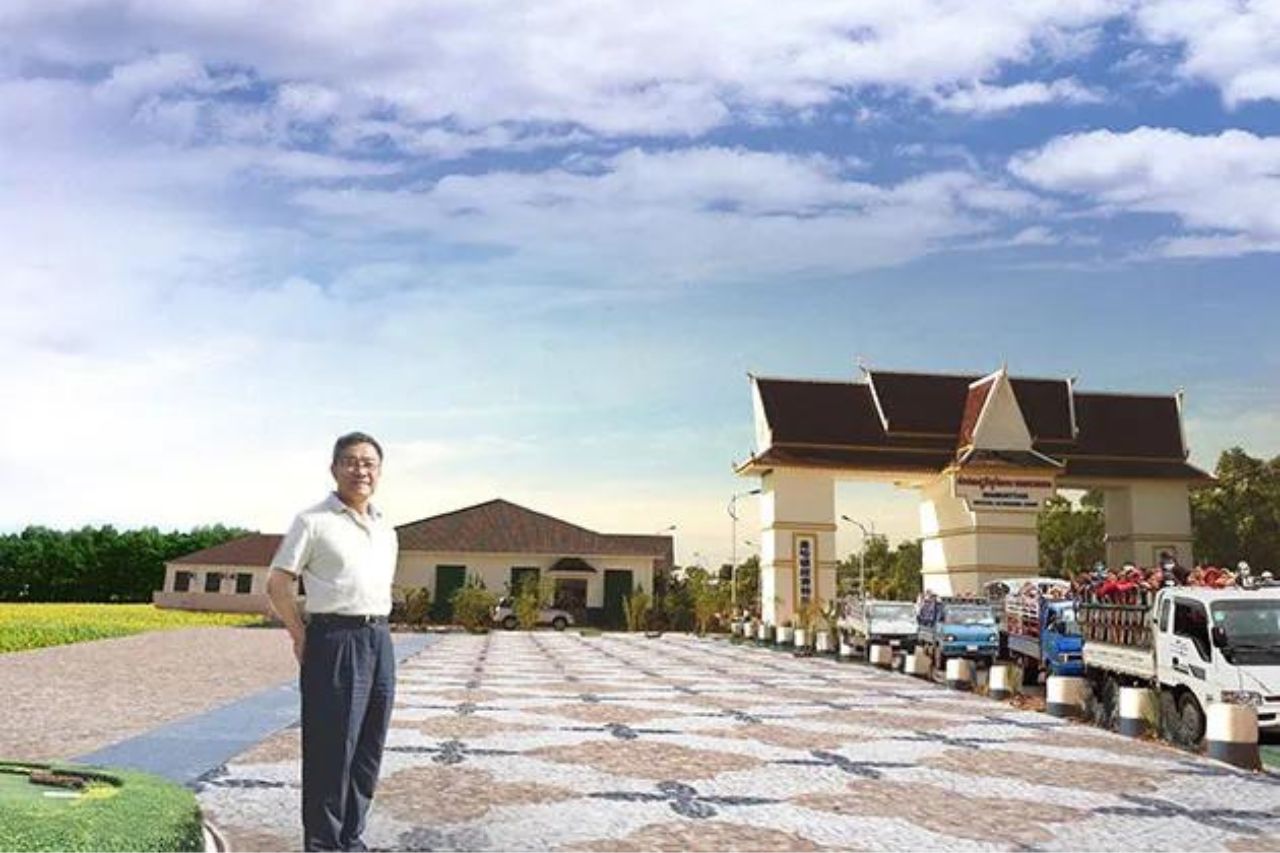
This planned 150-hectare industrial zone is located within the marshy farmland under the jurisdiction of the Cambodian Ministry of Defense. It is situated 6 kilometers from the Cambodia-Vietnam border, with convenient access to Ho Chi Minh City’s airport and seaport, just over an hour’s drive away, which is closer compared to the journey of over two hours to the capital city, Phnom Penh.
As the Cambodian Ministry of Defense was unable to integrate local farmers, Prime Minister Hun Sen thought of Yang Ke Cheng, the Chairman of Mede Group, who had successfully revived the hometown factory. He entrusted him with the important task of spearheading the project. With the goal of emulating China’s Shenzhen Special Economic Zone (located adjacent to Hong Kong) and leveraging the geographical advantage of being connected to Ho Chi Minh City and its port, they aimed to develop the Manhattan Economic Zone.
Taking on this significant responsibility, Yang Ke Cheng began planning and developing the economic zone, offering preferential treatment and low-cost options for manufacturers affected by anti-dumping duties. The economic zone includes Cambodian customs offices, business investment officials, and other clearance offices, allowing goods to be directly transported to Ho Chi Minh Port for export, bypassing the border clearance process.
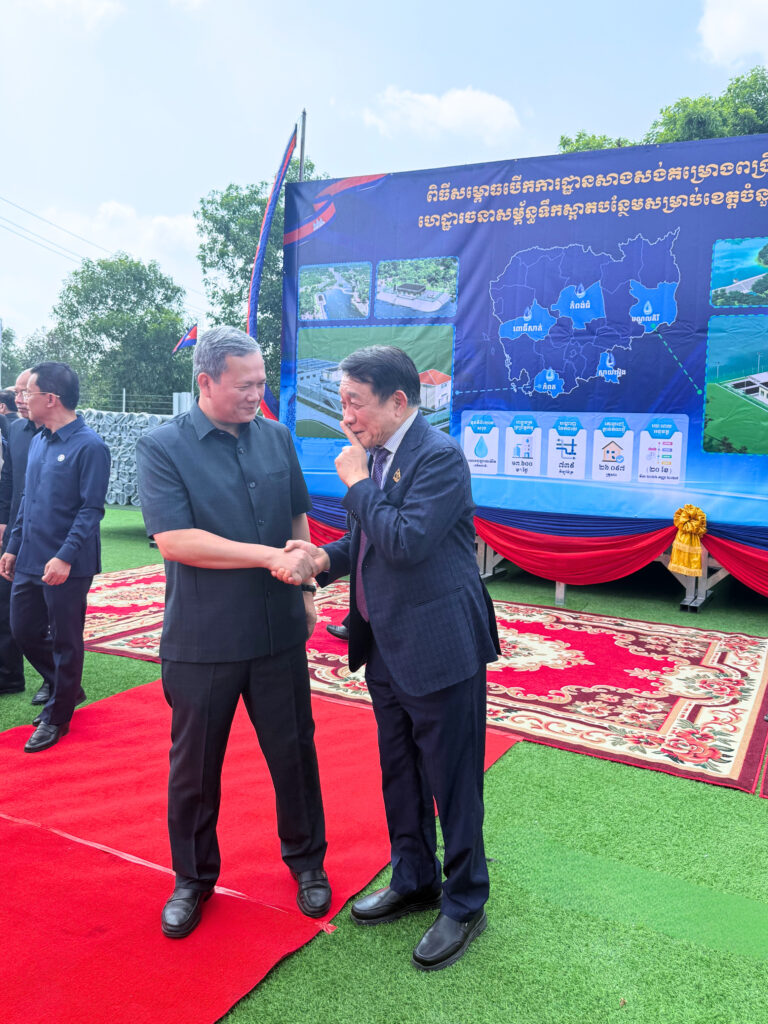
On August 11, 2005, Cambodian Prime Minister Hun Sen personally led a delegation of government officials to hold the inauguration ceremony of the Manhattan Economic Zone, even referring to himself as the “midwife” of the special zone. Yang Ke Cheng managed the zone with great care and personal involvement. Over the course of 12 years, the Manhattan Economic Zone has expanded from its original size of 150 hectares to nearly 400 hectares, accommodating 33 companies. The zone now exports over a thousand containers directly to Ho Chi Minh Port every month.
This includes several Taiwanese companies such as Xue Changxing Company, the world’s largest wetsuit factory, and Sanfeng, a curtain processing factory under Yifeng. Other companies like Xinxing Footwear from a Hong Kong-listed company and Best Way, one of the world’s top three bicycle manufacturers, have also established their presence in the zone. Additionally, major leather goods factories from South Korea have set up their operations here as well.
Transplanting the Spirit of Taiwan
The workforce in the industrial zone has increased from the initial 300 farmers to the current 28,000 employees. The New Southbound pioneer expressed satisfaction, stating, “This means improvement for 28,000 families.”
Looking ahead, there are plans to collaborate with established and advanced academic institutions in Taiwan to establish medical facilities within the zone, integrate local universities to develop vocational education systems, construct suitable housing, and build a smart city. These initiatives aim to create a new town by condensing and transplanting the successful experiences of Taiwan’s economic development into the local context. This blueprint aligns with Yang Ke Cheng’s vision for the development of the Manhattan Economic Zone and the New Southbound strategy.