
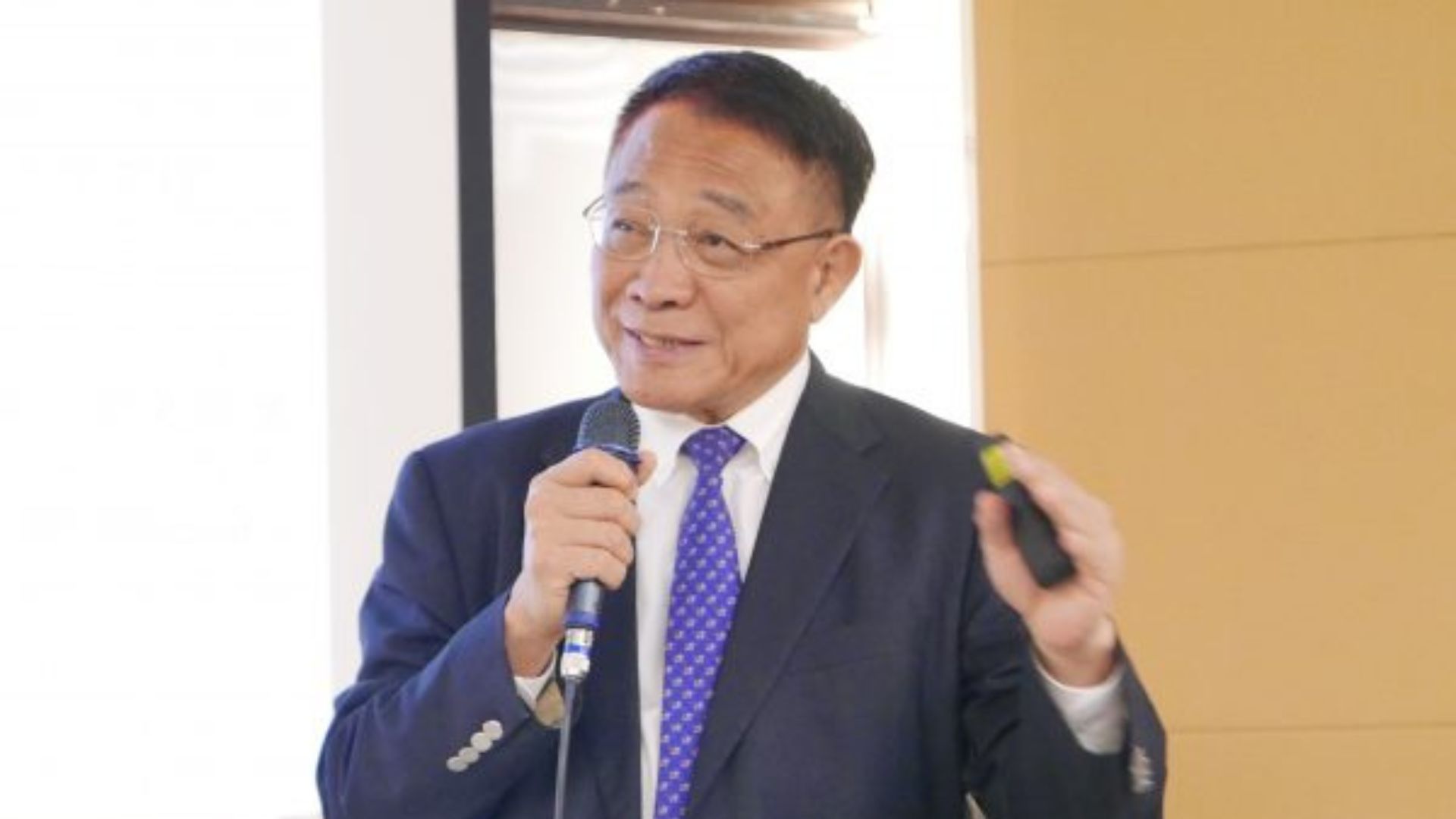
Mr. Yang Kecheng, Chairman of Meide Medical Group, a publicly listed company in China, is a pioneer of the New Southbound Policy. Back when Taiwanese businessmen were eagerly venturing westward, he demonstrated exceptional foresight by choosing to establish factories in the Philippines. Subsequently, he successfully transformed the hometown of Prime Minister Hun Sen in Cambodia and, in response to Hun Sen’s invitation, helped build Cambodia’s largest economic zone.
Yang Kecheng, a graduate of the International Trade Department at National Chengchi University, was invited back to his alma mater on the 25th to share his insights on business management. He mentioned that his first factory in Cambodia was not in the capital city of Phnom Penh but rather in the province of Kampong Speu, located over 100 kilometers north of Phnom Penh. The area is home to Cambodia’s largest industrial base, covering an area of 28 hectares. It was a donation made by Mainland China 60 years ago as a gesture of friendship. However, due to its vast size and the internal conflicts that ensued, it remained abandoned for over a decade.
At that time, Cambodia suffered from a lack of basic infrastructure, including a shortage of electricity in many areas. However, the industrial zone had a power plant as it was considered a national-level project by Mainland China. Yang Kecheng remarked that when he arrived, the place was desolate, with only a few trees that had been planted 40 years ago, providing shade with their large canopies. It was the dry season in Cambodia, and due to the water shortage, the trees had shed their leaves, leaving the branches covered in flowers. As Yang Kecheng sat under the tree, enjoying the cool breeze, he had a sudden realization: “The value of the trees exceeds that of the factory.” Inspired by this thought, he made the decision to invest, which was considered bold by outsiders.
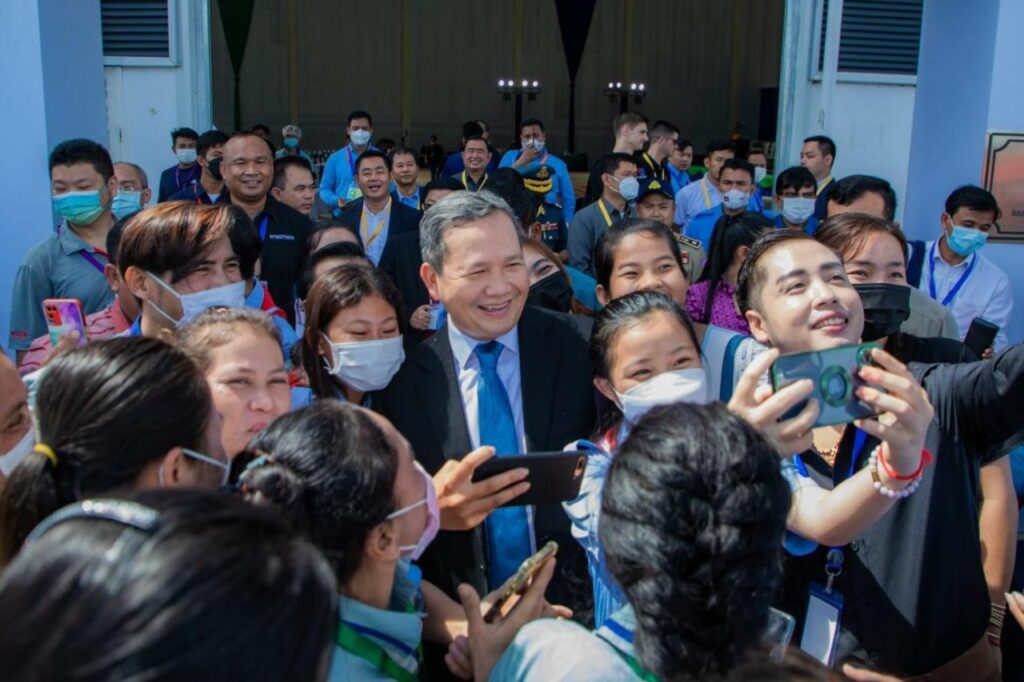
Under Yang Kecheng’s leadership, the industrial zone that had been abandoned for over a decade was revitalized. “The advantage of Taiwanese businessmen lies in stable orders and familiarity with industry technology,” said Yang Kecheng. His factory began shipping products within three months, which brought great joy to the Prime Minister, as Kampong Speu was his hometown and his father had worked there. At the time, Cambodia had just emerged from a civil war, and Yang Kecheng created over a thousand job opportunities in the area. On the official opening day of the industrial zone, Prime Minister Hun Sen personally attended the ribbon-cutting ceremony with government officials and military personnel.
However, Hun Sen’s ambitions extended beyond that. He aspired to replicate the model of Shenzhen in Mainland China, where a small fishing village had grown into a thriving economic powerhouse with the support of Hong Kong. He wanted to establish an economic zone near the Vietnam-Cambodia border, close to Ho Chi Minh City. However, the Cambodian government lacked experience in this regard and sought the assistance of experienced Taiwanese businessmen, which led them to think of Yang Kecheng.
“I wasn’t familiar with land development, but at the request of the Prime Minister, I accepted this challenge,” recalled Yang Kecheng. After three years of construction in the local area, coincidentally, it coincided with the first wave of Taiwanese businessmen fleeing from Mainland China. Industries facing anti-dumping duties in Vietnam and Mainland China rushed to the Manhattan Economic Special Zone in Cambodia. As a result, the first phase of the special zone’s five-year plan was highly successful. “Now we’re in the third phase, with an even larger scale,” Yang Kecheng added.
“Taiwanese businesses have many industrial zones in Vietnam, but in Cambodia, we have only one economic special zone that is not limited to industrial activities. It can accommodate commercial ventures and residential areas as well,” said Yang Kecheng. He expressed his desire to transform the Cambodia Manhattan Economic Special Zone into a platform where Taiwanese industries, whether they come from Mainland China or even venture out from Taiwan, can find a secure place for development. Currently, approximately 2,000 containers are exported monthly through the Ho Chi Minh port. “Containers from the special zone are directly shipped to Ho Chi Minh port without the need for inspection, both for exports and imports,” Yang Kecheng added with a smile. He aims to establish the local area as a common platform for Taiwanese businesses to enter the ASEAN market. Furthermore, he welcomes industries from Mainland China to foster a friendly and cooperative economic special zone, rather than engaging in conflicts and political confrontations.