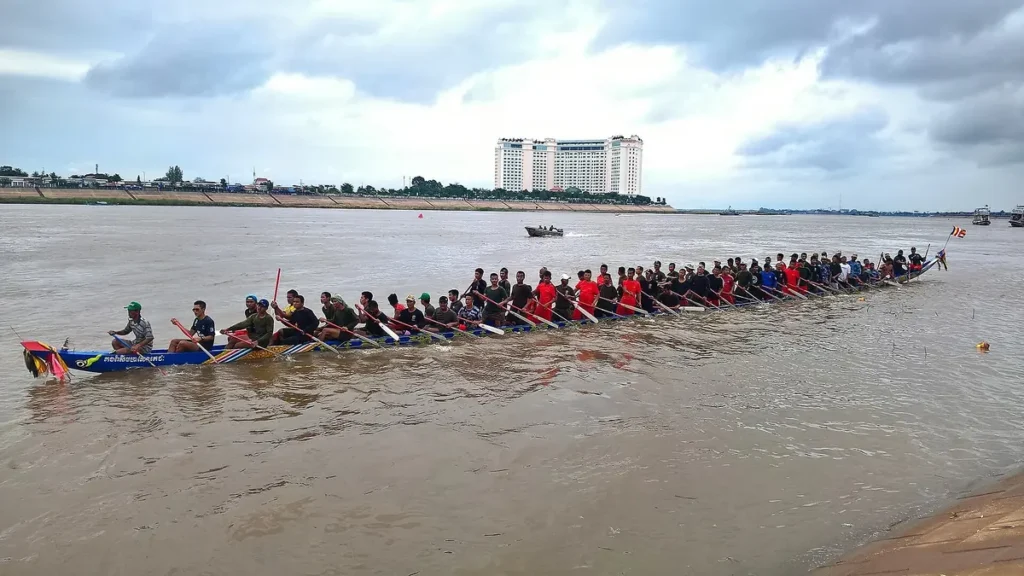
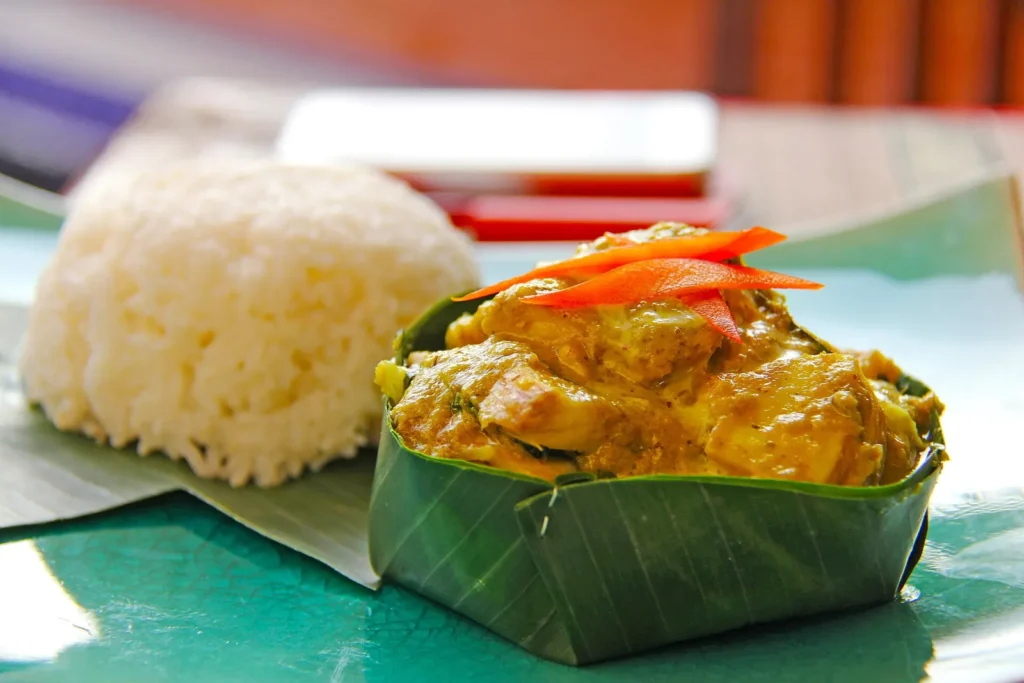
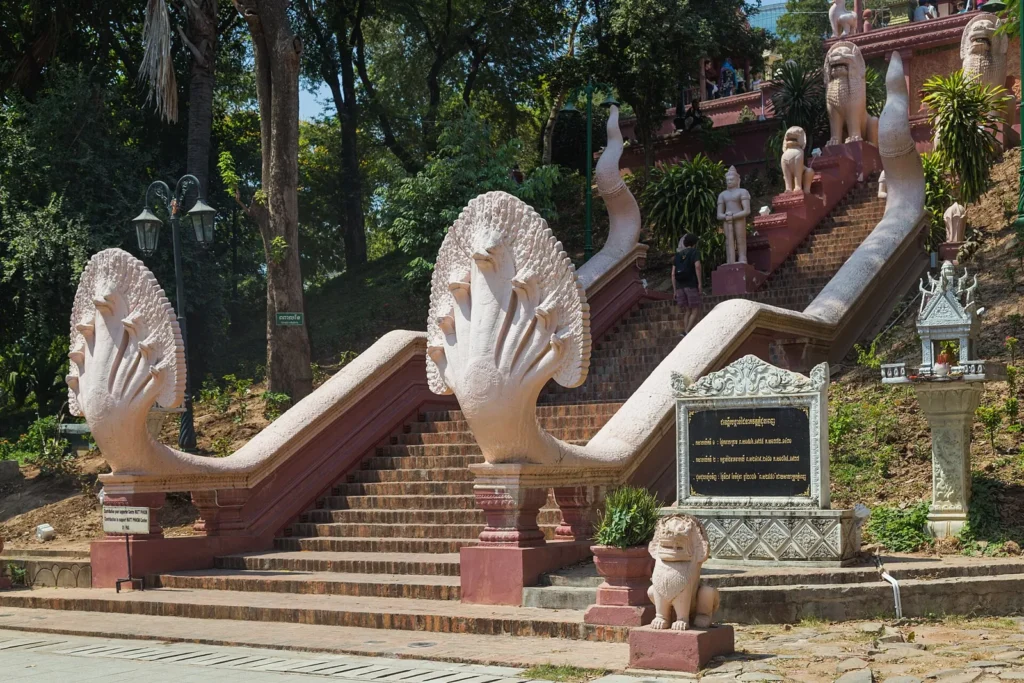
Summary: Cambodia has seven elements on UNESCO’s intangible cultural heritage lists: five on the Representative List (the Royal Ballet, Sbek Thom shadow theatre, tugging rituals and games, Kun Lbokator martial arts and krama) and two on the Urgent Safeguarding List (Chapei Dang Veng and Lkhon Khol Wat Svay Andet). A nomination for the traditional Khmer wedding is listed for 2026.
Using UNESCO’s official descriptions, this article explains each element and its year of inscription, how these arts nearly disappeared under the Khmer Rouge and were revived after 1979, how they compare with Cambodia’s five World Heritage Sites, and the coconut dance that began in Svay Rieng Province.
(Last updated: 27 October 2026)
1. Cambodian traditional arts at a glance
Cambodia has seven UNESCO intangible heritage elements. The earliest on the Representative List are the Royal Ballet and Sbek Thom shadow theatre (2008); the most recent is krama, inscribed in 2024.
| Element | Type | List | Inscribed |
|---|---|---|---|
| Royal Ballet of Cambodia (Khmer classical dance) | Dance | Representative List | 2008 (proclaimed a Masterpiece in 2003) |
| Sbek Thom, Khmer shadow theatre | Shadow theatre | Representative List | 2008 (proclaimed in 2005) |
| Tugging rituals and games | Agricultural ritual | Representative List (joint with the Philippines, Korea and Viet Nam) | 2015 |
| Chapei Dang Veng | Music and storytelling | Urgent Safeguarding List | 2016 |
| Lkhon Khol Wat Svay Andet | Masked dance drama | Urgent Safeguarding List | 2018 |
| Kun Lbokator, traditional martial arts | Martial art | Representative List | 2022 |
| Cultural practices linked to krama | Textile | Representative List | 2024 |
2. What are Cambodia’s UNESCO intangible heritage elements, and what is pending?
UNESCO’s Cambodia page lists seven elements: five on the Representative List and two on the Urgent Safeguarding List. Nominations in progress are the traditional Khmer wedding (listed for 2026) and Khmer New Year (pending priority treatment).
The Urgent Safeguarding List covers traditions whose transmission is under serious threat. Cambodia’s two elements on it, Chapei Dang Veng and Lkhon Khol, are each carried on by only a few performers and communities.
UNESCO inscribes specific elements rather than whole art forms. Lkhon Khol, for example, is inscribed as “Lkhon Khol Wat Svay Andet”, the masked dance drama of the Svay Andet pagoda community.
3. The Royal Ballet: inscribed in 2003 or 2008?
Both dates are correct. UNESCO proclaimed the Royal Ballet a Masterpiece of the Oral and Intangible Heritage of Humanity in 2003, and in 2008 these Masterpieces were incorporated into the new Representative List, so UNESCO records 2008 as its year of inscription.
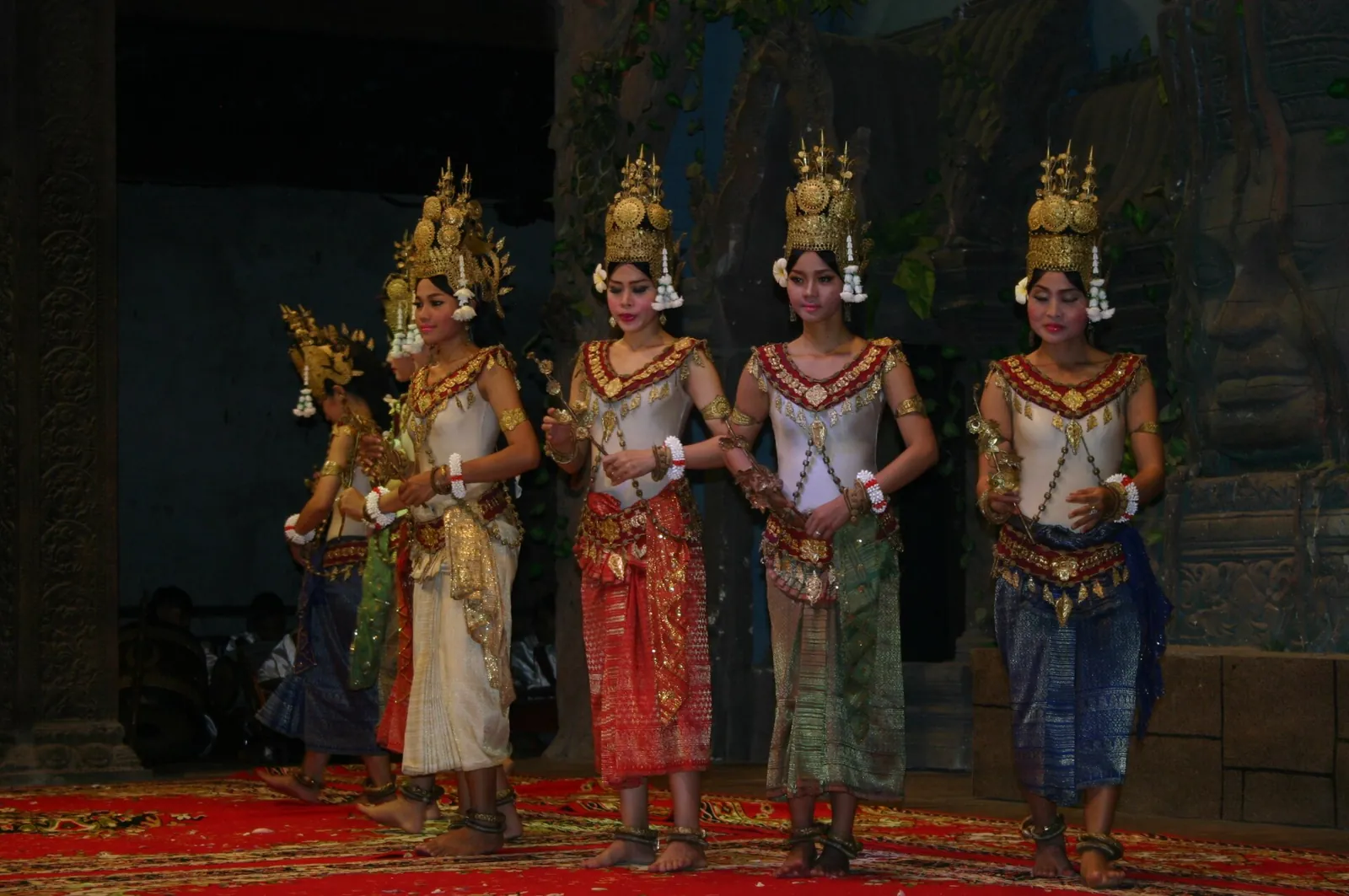
UNESCO describes the Royal Ballet, also known as Khmer classical dance, as closely associated with the Khmer court for more than a thousand years and performed at royal ceremonies such as coronations, marriages, funerals and Khmer holidays. Its repertoire perpetuates legends about the origins of the Khmer people, and its four character types, Neang (female), Neayrong (male), Yeak (giant) and Sva (monkey), each have their own colours, costumes, make-up and masks.
Dancers train intensively for many years to master the gestures and poses. Performances are accompanied by an orchestra and a female chorus that narrates the story and points to the emotions the dancers express. Dancers were once seen as messengers between the king and the gods and ancestors. According to Wikipedia, the most often performed classical dances today are the Blessing Dance (Robam Chuon Por) and the Apsara Dance (Robam Tep Apsara).
4. Sbek Thom: how do you perform with two-metre puppets?
Sbek Thom uses two-metre-high, non-articulated puppets cut from a single piece of openwork leather. Performances tell the Reamker, the Khmer version of the Ramayana, and a single presentation can use up to 160 puppets.
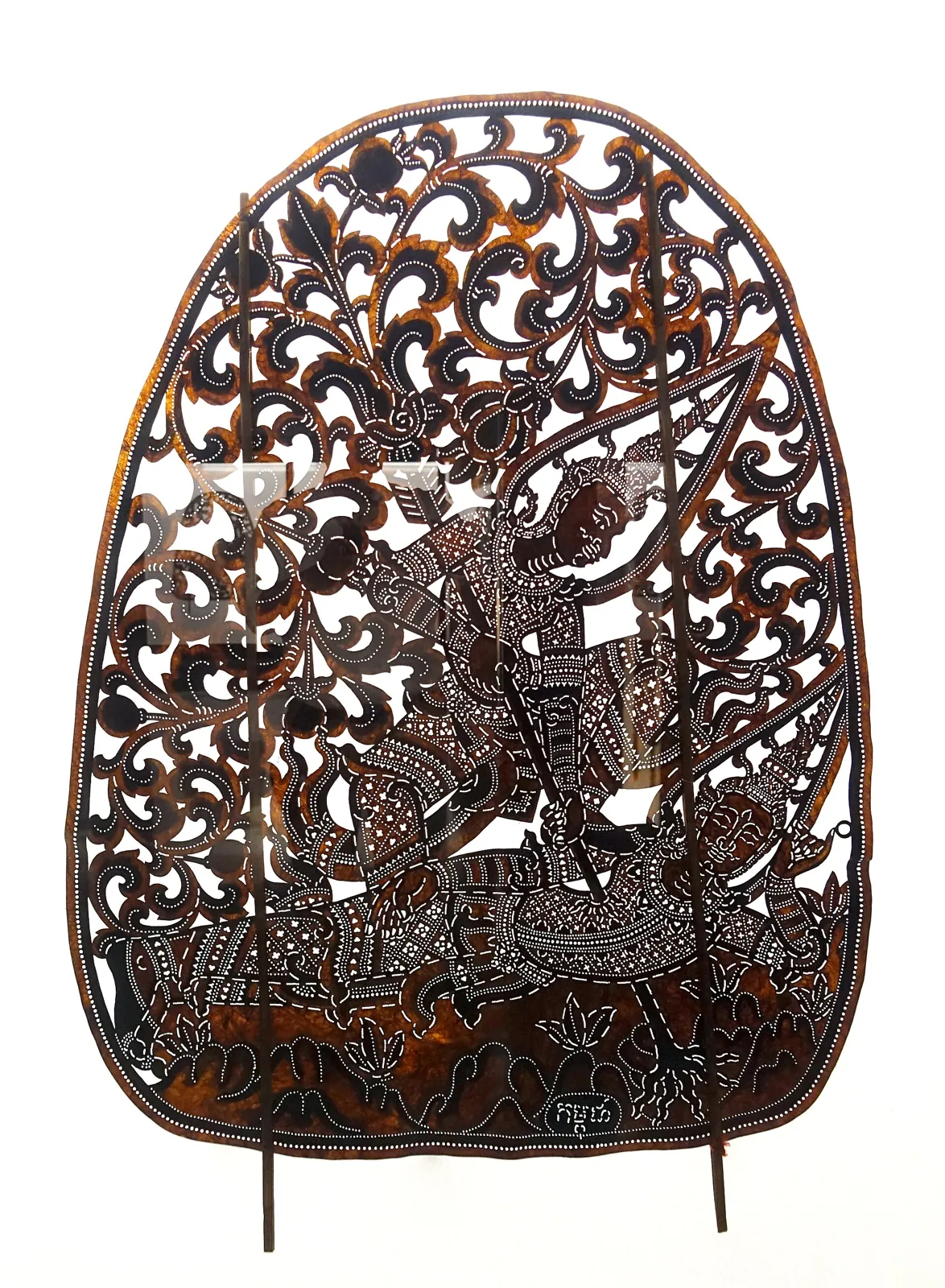
According to UNESCO, each puppet is made during a specific ritual, and the hide is dyed with a solution made from the bark of the Kandaol tree before being mounted on two bamboo sticks. Performances traditionally take place at night outdoors, beside a rice field or a pagoda: a white screen is stretched between two tall bamboo poles, with a fire behind it, now often replaced by spotlights. Puppeteers bring the figures to life with specific dance steps, accompanied by an orchestra and two narrators, and the story can run over several nights.
Sbek Thom predates the Angkor period and, like the Royal Ballet and masked dance, is considered a sacred art. Performances were dedicated to the gods and held only three or four times a year on occasions such as Khmer New Year, the King’s birthday or the veneration of famous people. After the fall of Angkor in the 15th century it gradually moved from ritual to artistic performance while keeping its ritual character.
5. Lkhon Khol: why is it tied to one pagoda?
Lkhon Khol Wat Svay Andet is a masked dance drama performed only by men, telling only the Reamker, and kept alive by the community around Svay Andet pagoda in Kandal Province, about 10 km east of Phnom Penh. It was inscribed on the Urgent Safeguarding List in 2018.
The performance is held to honour Neak Ta, the guardian spirits of a place and its people, and to ask for the village’s wellbeing and good harvests; one scene, Kumbhakarna blocking the water, is believed to bring enough rain for the farming season. UNESCO’s decision notes that the tradition was most severely threatened under the Khmer Rouge. For Neak Ta and Cambodia’s other religions, see Religion in Cambodia.
6. Chapei Dang Veng: Cambodia’s art of sung storytelling
Chapei Dang Veng is singing accompanied by the chapei, a plucked lute. Its lyrics combine education, social commentary and satire with traditional poems, folk tales and Buddhist stories. It was inscribed on the Urgent Safeguarding List in 2016.
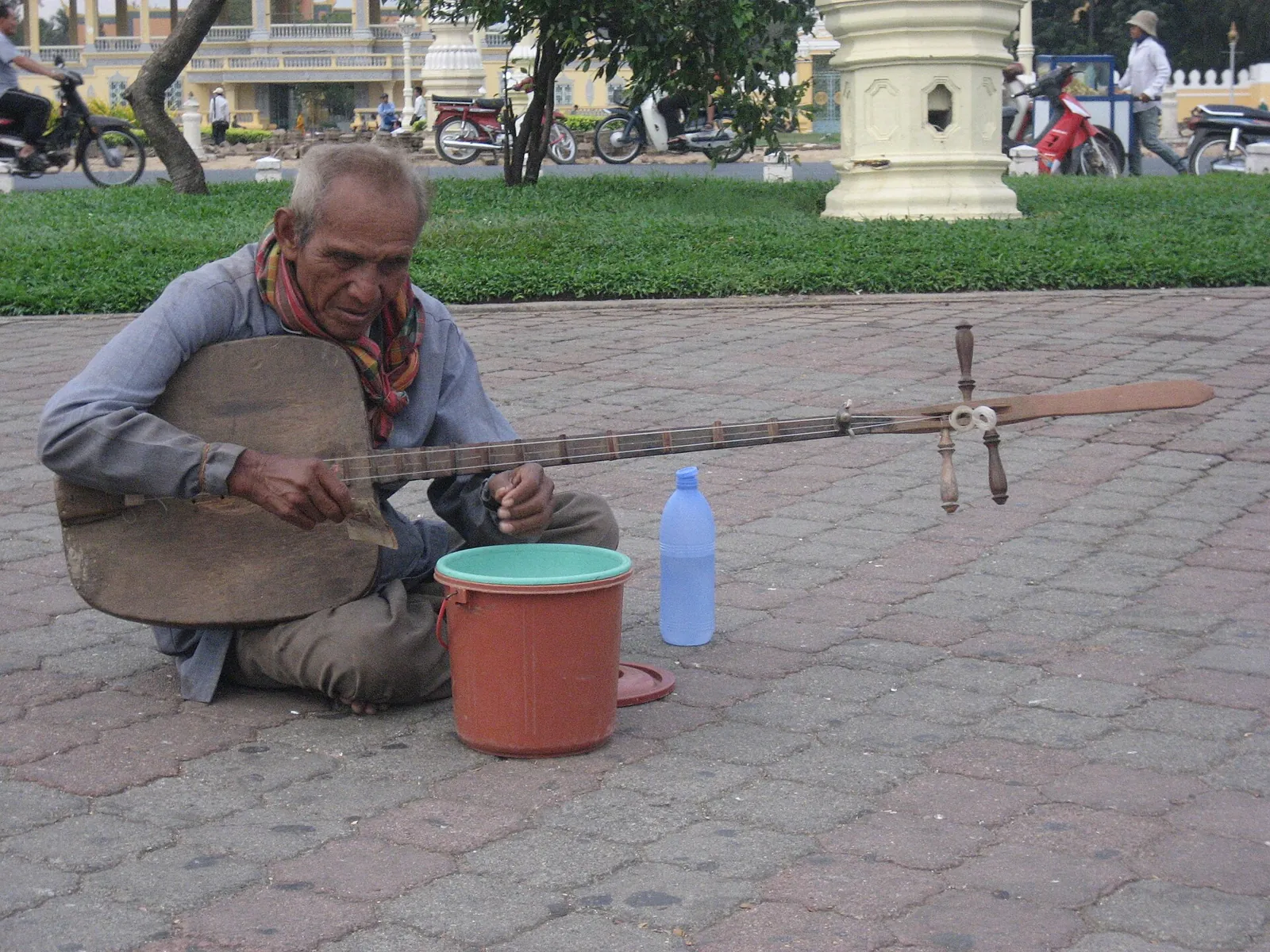
UNESCO notes that Chapei Dang Veng is often performed at cultural festivals. Most performers are men, though there is no gender restriction, and the art demands musical talent, wit, improvisation and storytelling skill; listeners also hear Old Khmer through the lyrics. It is passed on within families or from master to apprentice, but there are now few performers and even fewer masters, and the Khmer Rouge period severely disrupted transmission.
7. Kun Lbokator: a martial art dating back to the first century
Kun Lbokator is Cambodia’s traditional martial art. UNESCO describes it as dating back to the first century and as developing practitioners’ mental and physical strength and discipline through self-defence techniques and a philosophy of non-violence. It was inscribed on the Representative List in 2022.
Masters teach students to respect nature and others and to protect vulnerable communities and the environment, and some masters are believed to have healing and protective powers. Kun Lbokator is still performed as part of ritual offerings to local deities and is practised by people of every age, gender, education level and background.
8. Krama: the heritage Cambodians use every day
Krama is a rectangular checked cloth woven from cotton or silk. It is used as a scarf, belt, head cover or blanket, and even as a hammock for children. It was inscribed on the Representative List in 2024 as cultural practices and expressions linked to krama.
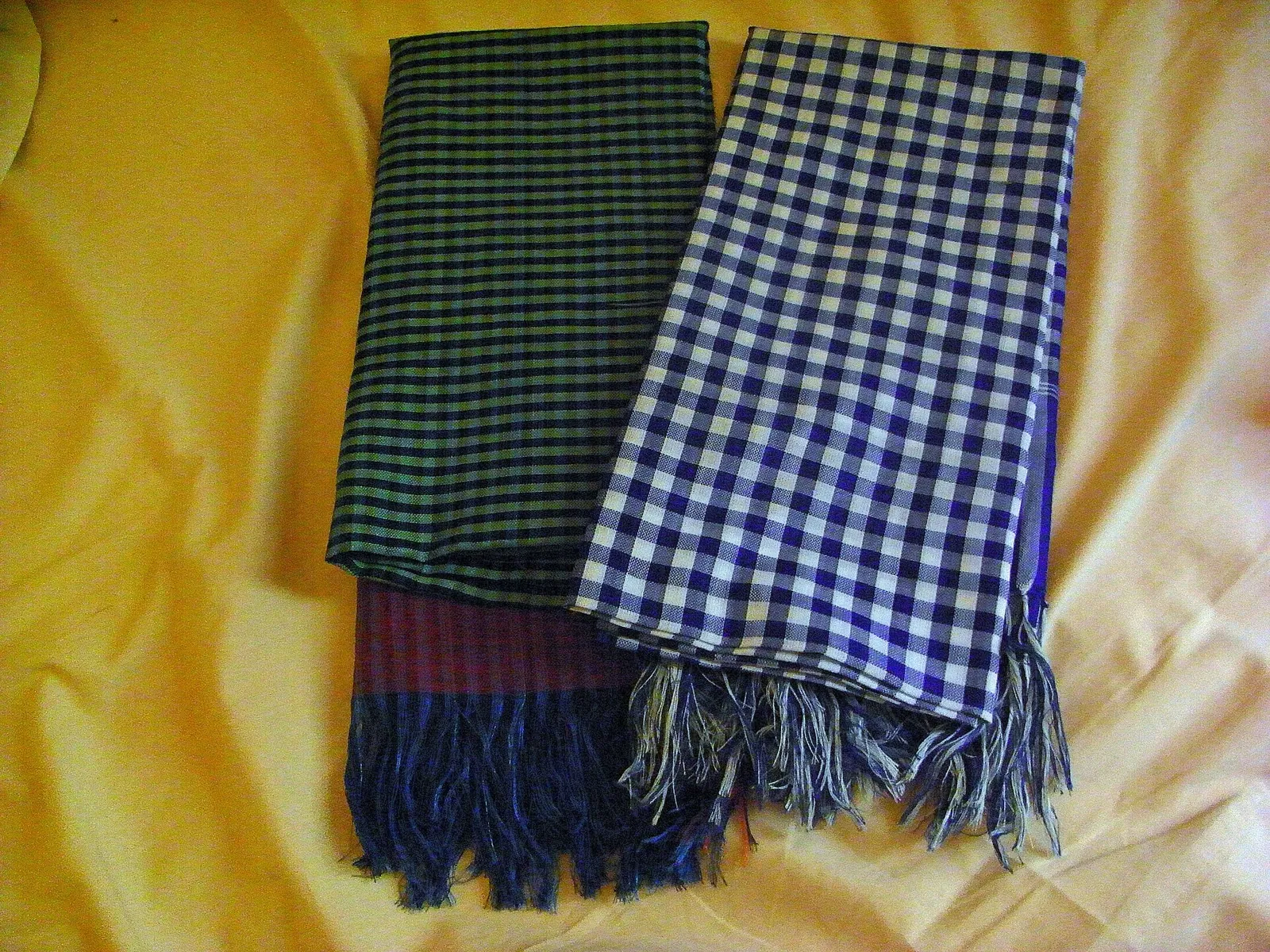
UNESCO notes that krama comes in many grid patterns, dyed in white, yellow, red and blue with pigments from plants and insects, and is handwoven on a traditional loom. It is used every day by people in all walks of life and also in rituals, festivals, food preparation and care of the sick. Weaving is mostly done by women, while men grow and pick cotton, gather dyes and repair looms. Daughters once learned from their mothers; today krama is mostly made by professional weaving groups and producers, and schools also teach it. Le Petit Journal reported that Cambodia’s March 2023 nomination cited archaeological evidence that krama existed in the pre-Angkorian period.
9. Tugging rituals and games: a farming rite without winners
Tugging rituals and games, a joint nomination by Cambodia, the Philippines, the Republic of Korea and Viet Nam, was inscribed on the Representative List on 2 December 2015. In rice-farming cultures, tugging is held to pray for good harvests and mark the start of a new farming cycle, deliberately without emphasising who wins.
10. After the Khmer Rouge: how these arts were revived
UNESCO records that the Khmer Rouge regime (1975–1979) killed almost all dance and music masters and destroyed many puppets. After 1979 the few surviving artists rebuilt troupes, but several of these arts still face serious threats to their transmission.
| Element | Under the Khmer Rouge | Revival and today |
|---|---|---|
| Royal Ballet | Almost all dance and music masters were killed | Troupes re-formed after 1979 and restored the old repertoire; challenges include limited funding and venues, competition from modern media and the risk of becoming a mere tourist show |
| Sbek Thom | Many puppets destroyed; the art nearly vanished | Revived from 1979 by a few surviving artists; three shadow theatre troupes rebuilt |
| Chapei Dang Veng | Transmission severely disrupted | Few performers and fewer masters; Urgent Safeguarding List since 2016 |
| Lkhon Khol | Most severely threatened | Still kept by the Svay Andet community; Urgent Safeguarding List since 2018 |
11. How does intangible heritage differ from World Heritage?
World Heritage protects monuments and places such as Angkor; intangible cultural heritage protects living traditions such as dance, crafts and rituals. Cambodia has five World Heritage Sites and seven intangible heritage elements.
| World Heritage Site (UNESCO name) | Inscribed |
|---|---|
| Angkor | 1992 |
| Temple of Preah Vihear | 2008 |
| Temple Zone of Sambor Prei Kuk | 2017 |
| Koh Ker: Archaeological Site of Ancient Lingapura | 2023 |
| Cambodian Memorial Sites | 2025 |
For the story of Angkor Wat and the city Zhou Daguan saw in the 13th century, see Angkor Wat and Zhou Daguan.
12. The coconut dance of Svay Rieng
The coconut dance (Robam Kuos Traloak) began around 1960 in Romeas Haek District, Svay Rieng Province. It is performed at wedding processions and festivals to lift the mood and depicts courtship between young villagers.
The dance suffered badly under the Khmer Rouge and was gradually revived. Svay Rieng is also home to the Manhattan Special Economic Zone; its city of Bavet sits on the Cambodia–Vietnam border, see our Bavet guide. For more on Cambodia’s festivals, history and customs, see our Cambodian Culture section.
13. FAQ
Q1: What are Cambodia's UNESCO intangible heritage elements?
Seven: the Royal Ballet, Sbek Thom shadow theatre, tugging rituals and games, Chapei Dang Veng, Lkhon Khol Wat Svay Andet, Kun Lbokator and cultural practices linked to krama.
Q2: When was the Royal Ballet of Cambodia inscribed by UNESCO?
It was proclaimed a Masterpiece in 2003 and incorporated into the Representative List in 2008, which UNESCO records as its year of inscription.
Q3: What are the characters in Khmer classical dance?
Four types: Neang (female), Neayrong (male), Yeak (giant) and Sva (monkey), each with its own colours, costumes, make-up and masks.
Q4: How big are Sbek Thom puppets?
About two metres high, cut from a single piece of leather and not articulated; one performance can use up to 160 puppets.
Q5: How old is Kun Lbokator?
UNESCO describes it as dating back to the first century; it was inscribed on the Representative List in 2022.
Q6: What is a krama?
A rectangular checked cotton or silk cloth used as a scarf, belt, head cover or blanket; the practices linked to it were inscribed by UNESCO in 2024.
Q7: Which Cambodian traditions are nominated for UNESCO?
UNESCO lists the traditional Khmer wedding (for 2026) and Khmer New Year (pending priority treatment).
Q8: How many World Heritage Sites does Cambodia have?
Five: Angkor (1992), Temple of Preah Vihear (2008), Sambor Prei Kuk (2017), Koh Ker (2023) and the Cambodian Memorial Sites (2025).
References
- UNESCO (accessed 27 October 2026) | Cambodia – Intangible Cultural Heritage (country page) | https://ich.unesco.org/en/state/cambodia-KH
- UNESCO (accessed 27 October 2026) | Royal ballet of Cambodia | https://ich.unesco.org/en/RL/royal-ballet-of-cambodia-00060
- UNESCO (accessed 27 October 2026) | Sbek Thom, Khmer shadow theatre | https://ich.unesco.org/en/RL/sbek-thom-khmer-shadow-theatre-00108
- UNESCO (accessed 27 October 2026) | Lkhon Khol Wat Svay Andet | https://ich.unesco.org/en/USL/lkhon-khol-wat-svay-andet-01374
- UNESCO | Decision 13.COM 10.A.3 (Lkhon Khol Wat Svay Andet) | https://ich.unesco.org/en/decisions/13.COM/10.A.3
- UNESCO (accessed 27 October 2026) | Chapei Dang Veng | https://ich.unesco.org/en/USL/chapei-dang-veng-01165
- UNESCO (accessed 27 October 2026) | Kun Lbokator, traditional martial arts in Cambodia | https://ich.unesco.org/en/RL/kun-lbokator-traditional-martial-arts-in-cambodia-01868
- UNESCO (accessed 27 October 2026) | Cultural practices and expressions linked to Krama, a traditional woven textile in Cambodia | https://ich.unesco.org/en/RL/cultural-practices-and-expressions-linked-to-krama-a-traditional-woven-textile-in-cambodia-02115
- UNESCO | Decision 10.COM 10.B.12 (Tugging rituals and games) | https://ich.unesco.org/en/decisions/10.COM/10.B.12
- Le Petit Journal | Le krama bientôt au patrimoine culturel immatériel de l'UNESCO | https://lepetitjournal.com/cambodge/krama-bientot-au-patrimoine-culturel-immateriel-de-unesco-396319
- Wikipedia (accessed 27 October 2026) | Dance in Cambodia | https://en.wikipedia.org/wiki/Dance_in_Cambodia
- IntoCambodia (accessed 27 October 2026) | Robam Kuos Traloak (Coconut Dance) | https://intocambodia.org/content/robam-kuos-traloak-coconut-dance
- Wikipedia (accessed 27 October 2026) | List of World Heritage Sites in Cambodia | https://en.wikipedia.org/wiki/List_of_World_Heritage_Sites_in_Cambodia
- Press OCM | Another Cambodian Archaeological Site Registered on World Heritage List | https://pressocm.gov.kh/en/archives/8270