economic growth

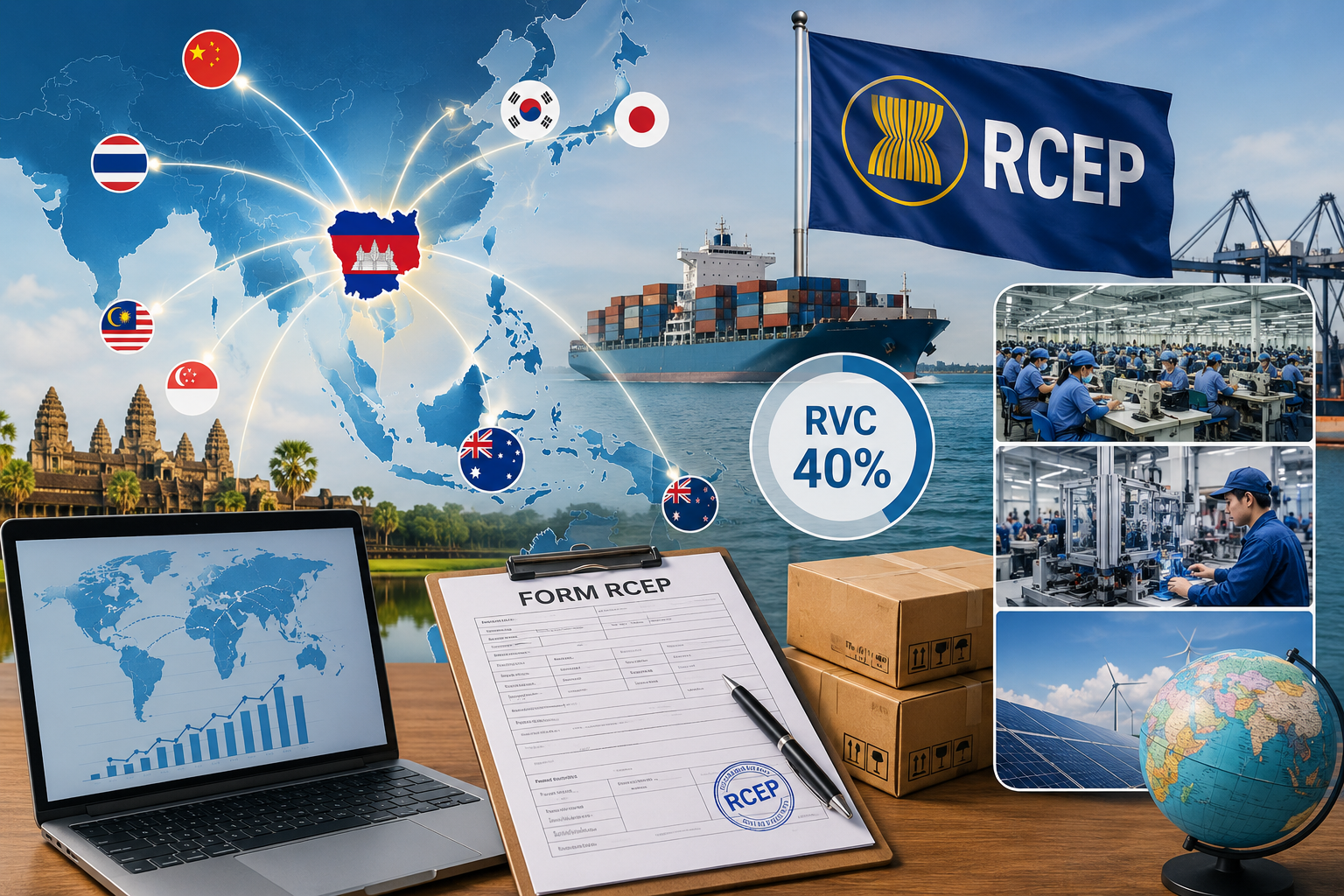
Export Advantages under RCEP: Cambodia Manufacturing Benefits and Filing Requirements

What export advantages does RCEP bring to Cambodia-based manufacturing? Using 2026 data, this article explains RCEP’s cumulative rules of origin, beneficiary sectors and export markets, key filing requirements for certificates of origin, and how RCEP complements the EU’s EBA and the U.S. market. It also explains why RCEP is a more durable advantage after Cambodia’s expected LDC graduation in 2029.
Export Advantages under RCEP: Cambodia Manufacturing Benefits and Filing Requirements Read More »

柬越跨境物流

Cambodia–Vietnam Cross-Border Logistics: Linking the Ho Chi Minh City Supply Chain to a Cambodian Factory

How should cross-border logistics be designed for a factory in Cambodia? This article breaks down the Bavet–Moc Bai corridor, inbound and outbound routes, ACTS transit clearance and origin compliance, and explains why proximity to the Ho Chi Minh City ports (about 70–140 km) is the most underrated operational advantage of a “Vietnam Plus One” setup.

Cambodia–Vietnam Cross-Border Logistics: Linking the Ho Chi Minh City Supply Chain to a Cambodian Factory Read More »

UK Delegation Led by Ambassador to Cambodia Visits Manhattan SEZ to Explore New Opportunities for Bilateral Economic and Trade Cooperation

On May 26, 2026, a UK delegation led by Mr. Dominic Williams, the British Ambassador to Cambodia, visited the Manhattan Special Economic Zone (MSEZ) in Bavet, Svay Rieng Province, for a comprehensive field research tour. Key members of the delegation included Mr. Christopher Williamson, First Secretary and Head of Political, Economic, and Development at the

UK Delegation Led by Ambassador to Cambodia Visits Manhattan SEZ to Explore New Opportunities for Bilateral Economic and Trade Cooperation Read More »

Cambodia’s Tiered EIA System: Using the EPA Fast Track to Set Up Light-Industry Operations

As both international ESG standards and the environmental rules of host countries tighten, Cambodia’s Ministry of Environment (MoE) has modernized its environmental impact assessment (EIA) regime. Prakas No. 3591 — issued on 6 May 2025 and in force from 6 June 2025 — sorts development projects into three control tiers (EPA, IEIA and FEIA), each with a statutory review limit of 30, 60 and 90 business days respectively.

Cambodia’s Tiered EIA System: Using the EPA Fast Track to Set Up Light-Industry Operations Read More »

Scroll to Top