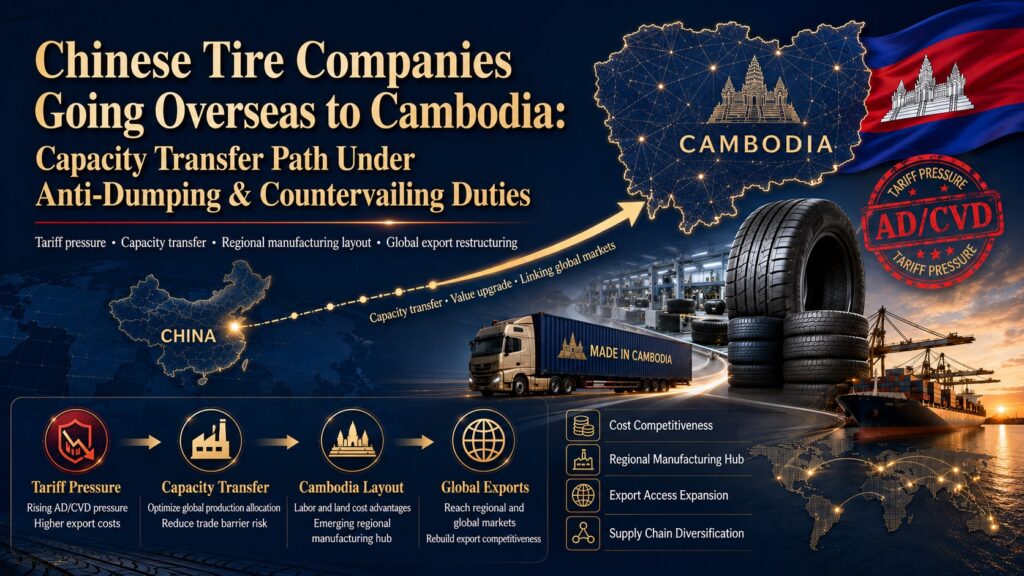


Are you interested in compliant investments in Cambodia? In recent years, Cambodia has enacted and revised a series of laws and regulations, including the Investment Law and the Law on Commercial Enterprises. By designating the Council for the Development of Cambodia as the regulatory authority for investments, Cambodia has established clear legal frameworks, streamlined investment procedures, and shortened approval processes. These developments have provided investors with a more transparent and well-defined investment legal system, thereby attracting a greater influx of foreign investment.
Overview of Investment Project Approval and Regulatory Authorities in Cambodia
1. Regulatory Authority: Role and Responsibilities of the Council for the Development of Cambodia in Cambodia.
The Council for the Development of Cambodia (CDC), serving as a one-stop service agency, is responsible for comprehensive reconstruction, development, and investment regulatory affairs. This institution is composed of the Cambodian Rehabilitation and Development Board and the Cambodian Investment Board, with the aim of assessing and making decisions on various reconstruction, development work, and investment project activities. Additionally, the CDC is responsible for approving qualified investment project applications submitted by investors and issuing the final registration certificates.
However, under specific conditions, investment projects are required to be submitted to the Office of the Council of Ministers for approval:
- Investment projects with an amount exceeding 50 million US dollars.
- Projects involving politically sensitive issues.
- Projects related to mineral exploration and development of natural resources.
- Projects that may have adverse environmental impacts.
- Infrastructure projects, including BOT (Build-Operate-Transfer), BOOT (Build-Own-Operate-Transfer), BOO (Build-Own-Operate), and BLT (Build-Lease-Transfer) models.
- Long-term strategic development projects.
2. Relevant Laws: Legal Protection and Incentive Policies for Foreign Investment in Cambodia
The Cambodian government recognizes foreign direct investment as a crucial catalyst for economic growth. While Cambodia does not have a dedicated foreign investment law, it generally ensures equal treatment for both foreign and domestic investments. The Investment Law, along with its amendments and other related legislations, provides protection and offers favorable tax and land lease policies for foreign investors. Moreover, foreign investors can also benefit from preferential treatment under the Generalized System of Preferences (GSP) granted by 28 countries and regions, including the United States, Europe, and Japan, to Cambodia.
On October 21, 2021, the Cambodian government announced that the new Investment Law had been signed by the King and officially came into effect. The new Investment Law will provide protective measures to encourage investments and foster diversified industrial development.
| Legal Name | Overview of the Content |
|---|---|
| Investment Law | The law specifies the investment activities of both Cambodian nationals and foreigners within the territory of Cambodia. It provides clear provisions regarding the investment regulatory authority, investment procedures, investment protection, incentive policies, land ownership and usage, labor utilization, dispute resolution, and other related aspects. |
| Amendment to the Investment Law | The amendment supplements and revises the Investment Law, providing relevant definitions and clear provisions in areas such as investment applications, acquisition and merger of investment projects, joint ventures, taxation, land ownership and usage, labor force, penalties, and more. |
| Regulation on the Organization and Operation of the Council for the Development of Cambodia | The law specifies the organizational structure, powers, responsibilities, and operational procedures of the regulatory authority for investments in Cambodia, which is the Council for the Development of Cambodia. |
| Decree No. 148 on the Establishment and Management of Special Economic Zones | The law establishes the legal procedures for establishing economic zones, outlines the management framework and responsibilities of economic zones, provides incentives for economic zones, specifies special measures for export processing zones, addresses labor management and utilization, vocational training, and the resolution of infringements and disputes. |
| Law on Commercial Regulations and Commercial Registration | The law establishes regulations for the establishment, organization, operation, dissolution, transfer, and changes of commercial companies, while also categorizing different types of companies. |
| Law on Commercial Contracts | The law stipulates the establishment, performance, interpretation, and enforcement of contracts of all types, including sales contracts, lease contracts, loan contracts, personal property mortgages, and guarantees, among other specific types of contracts. |
3. Institutional Safeguards: Stability and Protective Measures for the Investment Environment in Cambodia.
The Cambodian government provides certain investment safeguards for investors, including the following key points:
- Foreign and domestic investments are generally treated equally, ensuring that all investors, regardless of nationality and ethnicity, are treated equally under the law.
- The Cambodian government does not implement nationalization policies that would harm investors’ property, thus safeguarding the security of investors’ assets.
- For approved investment projects, the Cambodian government does not impose price controls on their products or services, thereby enhancing investment autonomy.
- Cambodia does not enforce foreign exchange controls, allowing investors to purchase foreign currency from the banking system for remittance abroad, enabling the settlement of financial obligations related to their investment activities.
4. Incentive Policies: Tax and Policy Advantages Available to Investors in Cambodia.
Qualified investment projects approved by the Council for the Development of Cambodia can benefit from a range of investment incentives, including the following key points:
- Exemption from import duties on production equipment, construction materials, spare parts, and raw materials for investment production enterprises, thereby reducing investment costs.
- Enterprises can enjoy a tax holiday period of 3 to 8 years (up to 9 years in economic zones) after investment, and thereafter, they are subject to a profit tax rate of 9% according to the tax law, thereby reducing the tax burden.
- Profits reinvested are exempt from profit tax, while dividend distributions are tax-free, encouraging reinvestment and profit distribution.
- Exemption from export tax when products are exported, encouraging the development of international trade.
5. Industries Encouraged for Investment in Cambodia.
Cambodia’s industry promotion policies primarily focus on two sectors: agriculture and tourism:
- Agriculture: The Cambodian government provides support and incentives for projects related to cultivation, livestock farming, and aquaculture, in accordance with the Investment Law. This primarily includes large-scale projects for rice, cash crops, and vegetable cultivation, as well as large-scale livestock and poultry farming, and freshwater and marine aquaculture projects.
- Tourism Industry: The various provinces and cities of Cambodia prioritize the tourism sector as one of their primary focuses, positioning it as a “priority development area,” “pillar industry,” and “featured industry” to expedite its growth.
In addition, Article 12 of the “Investment Law” stipulates that the key areas that the Cambodian government encourages investment include: innovation and high-tech industries; job creation; export-oriented; tourism; agricultural and processing industries; infrastructure and energy; provinces and rural development; environmental protection; investment in special development zones established by law. Investment incentives include full or partial exemption from duties and taxes.
6. Investment Restrictions
The Implementation Guidelines for the Amendment to the Investment Law (issued on September 27, 2005) list the investment activities that are prohibited for both Cambodian and foreign entities. These activities include the production and processing of narcotics and anesthetics, the production of toxic chemicals, pesticides, and other products that are prohibited for use under international rules or by the World Health Organization due to their impact on public health and the environment, the use of imported foreign waste for power generation, forest development activities prohibited by forestry laws, and other investment activities prohibited by law. Additionally, the guidelines also specify “investment activities not eligible for investment incentives” and “specific investment activities eligible for duty exemption but not profit tax exemption.”
The Investment Law stipulates provisions regarding land ownership and usage:
- For land used in investment activities, ownership must be held directly by Cambodian citizens or legal entities in which Cambodian citizens hold 51% or more of the shares.
- Investors are allowed to use land through various means, such as concessions, long-term leases without a specified end date, and short-term leases with renewal options. Investors have the right to own immovable property and personal assets on the land and use them as collateral.

Summarize
Cambodia offers numerous advantages in its investment environment, particularly in terms of industry encouragement and incentive policies. The government’s support in sectors such as agriculture and tourism aids investors in achieving success in these industries. However, investors also need to be aware of investment restrictions in Cambodia, particularly regarding prohibited investment activities and land usage regulations. Having a thorough understanding of Cambodia’s investment regulations and policies is crucial for investors to thrive in the Cambodian market and make informed investment decisions.
References
- Industrial and Commercial Bureau, Hong Kong Special Administrative Region. (n.d.). Investing in Cambodia Guide [Cambodia Investment Guide]. Retrieved March 23, 2023, from [source]
https://www.smefund.tid.gov.hk/english/tsf/deliverables/t19001002_cambodia_tc_guide.pdf - ASEAN Briefing. (June 22, 2021). Investment Law in Cambodia: What Foreign Investors Need to Know. Dezan Shira & Associates. Retrieved March 23, 2023, from [source].
https://www.aseanbriefing.com/news/cambodias-law-on-investment-what-foreign-investors-need-to-know/ - Ctils (Center for Urban and Territorial Information Studies). (August 5, 2021). Interpreting the Investment Law in Cambodia. Retrieved March 23, 2023, from [source].
https://www.ctils.com/articles/6902