
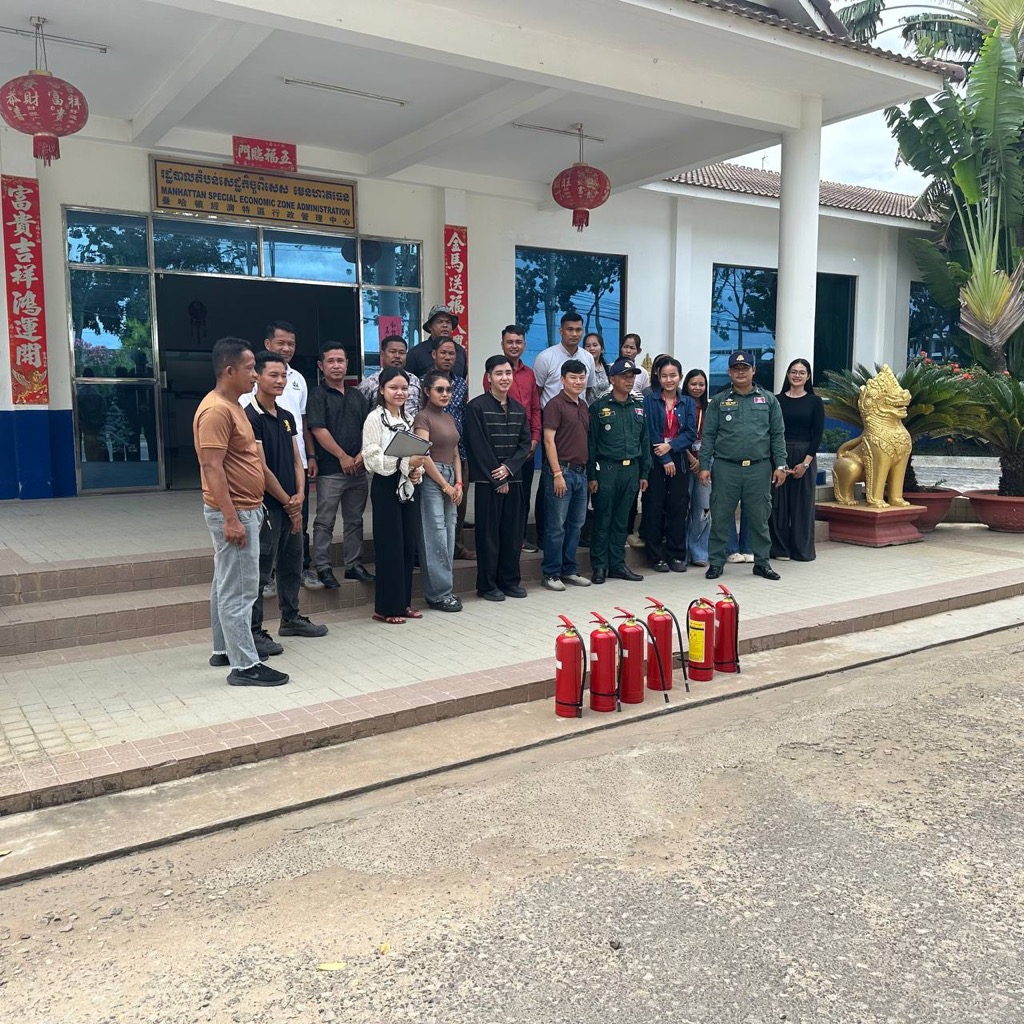
Fire safety at Manhattan SEZ was put to the test this week: officers from the Svay Rieng provincial fire department ran a full-day session combining classroom briefings with live extinguisher drills. For manufacturers evaluating Cambodia, how a zone handles safety is not a soft topic — it is an operating condition that can be inspected before you sign a lease.
Classroom Briefing: What Actually Causes Industrial Fires
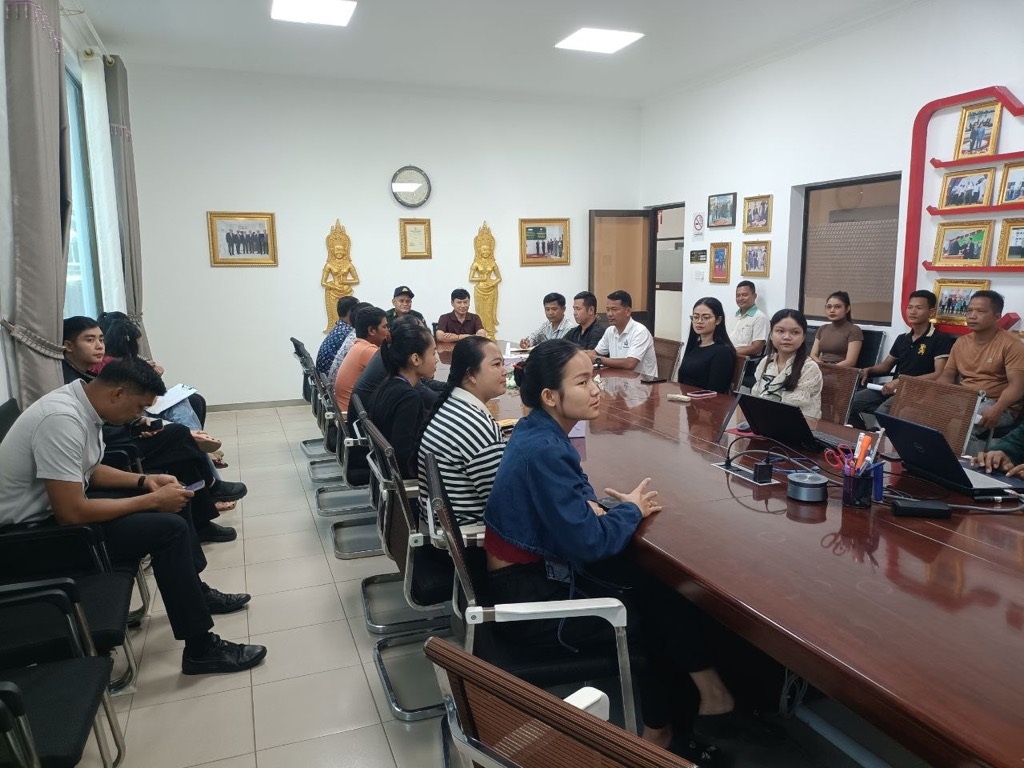
The session opened in the SEZ meeting room, where fire officers walked staff through the characteristics of industrial fires, day-to-day hazard inspection points, alarm and reporting procedure, first-response handling, and evacuation routes. The material was anchored in real scenarios drawn from production and office areas inside the zone rather than generic examples.
Staff from every function attended, and several raised specific questions about conditions in their own work areas.
Why Factory Fire Risk Differs From an Office Building
Concentrated fuel load: raw materials, work in progress and packaging are stored densely inside manufacturing halls. Once ignition occurs, spread is far faster than in a typical office environment.
Sustained electrical load: production equipment runs for long hours. Ageing wiring, overloaded circuits and improvised connections remain the most common cause of fires in industrial parks.
Complex evacuation routes: large floor areas and high headcount mean that without regular drills, the difference in how the first few minutes are handled often determines the eventual scale of an incident.
That is why the briefing gave equal weight to first response and evacuation. Fire safety is not what happens when the engine arrives — it is whether someone on site knows how to use an extinguisher, and is willing to.
Live Drills: The Four-Step Extinguisher Routine
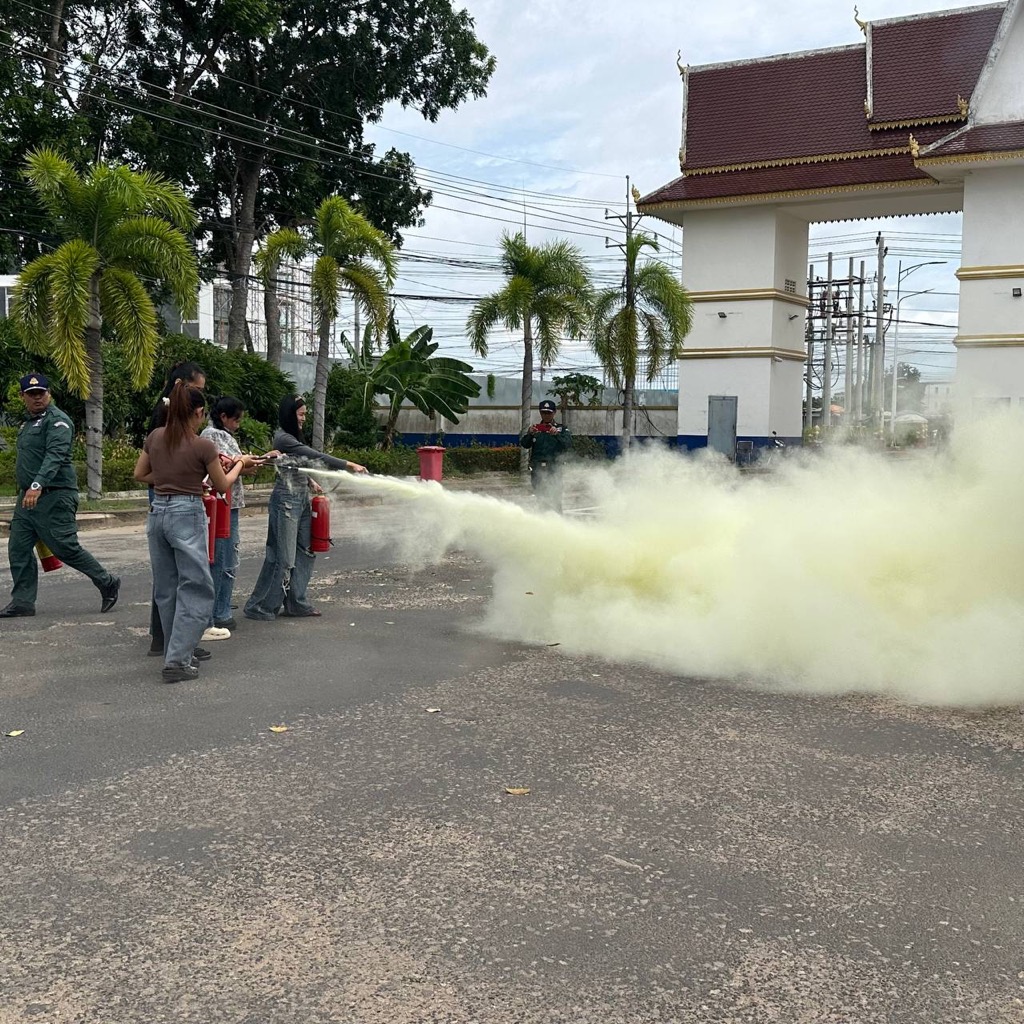
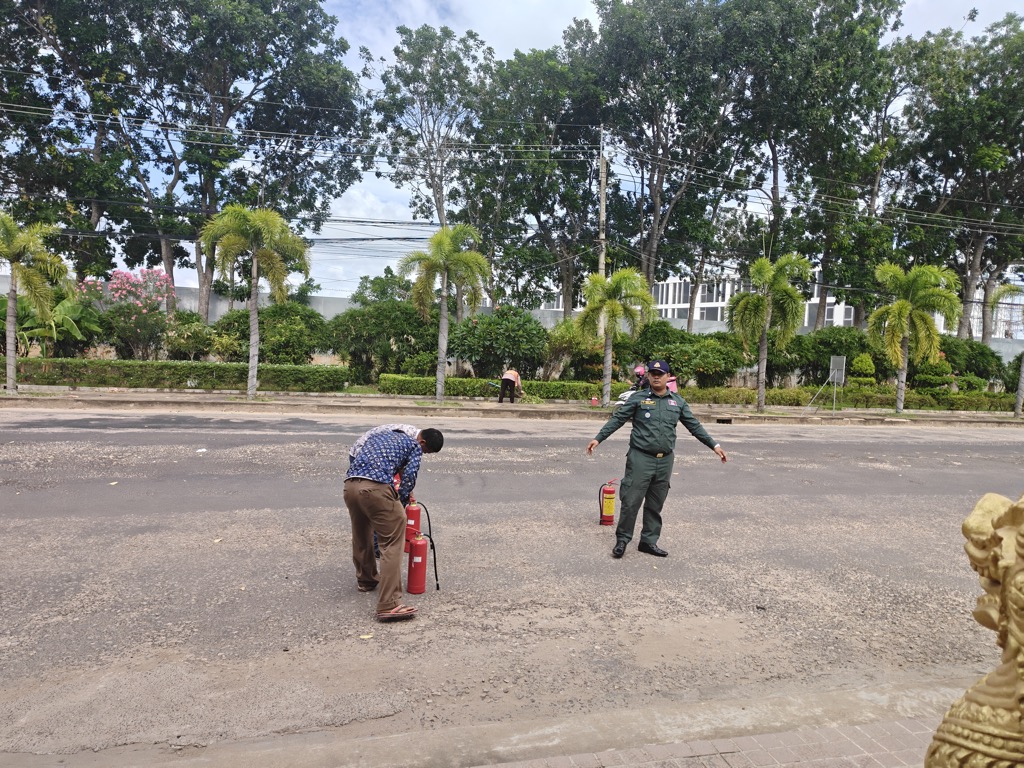
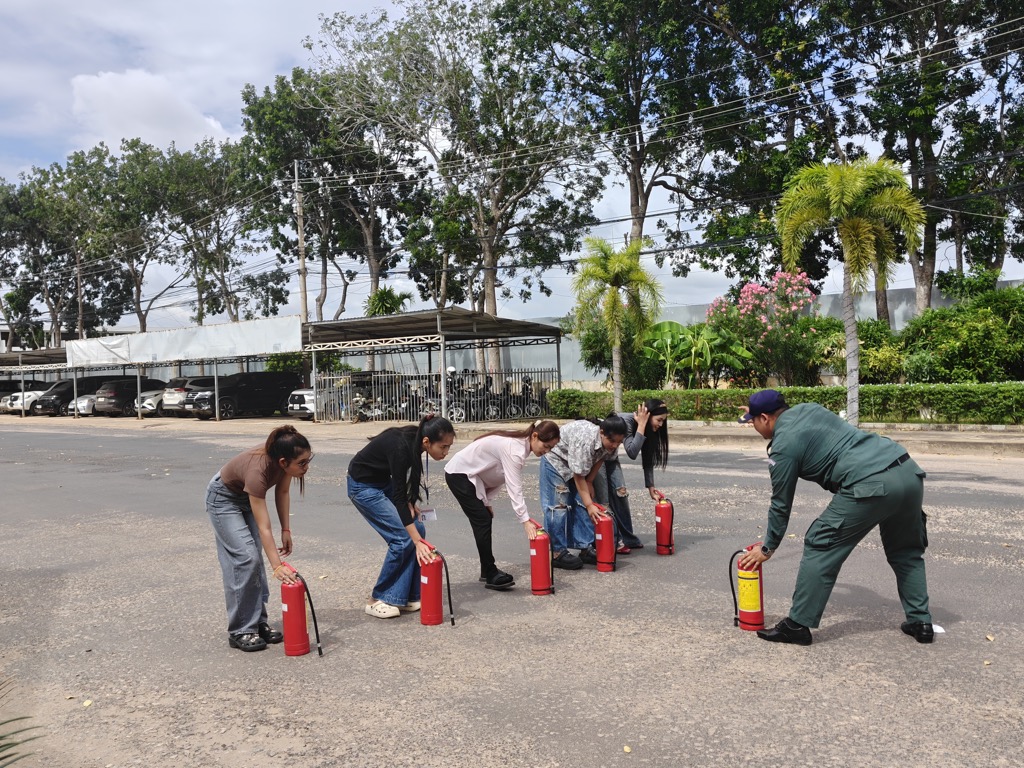
Training then moved outdoors for live extinguisher drills. Officers demonstrated the correct sequence for dry powder units — lift, pull, grip, squeeze — along with positioning and discharge angle.
Staff then took turns operating the extinguishers themselves under supervision, completing simulated suppression exercises to procedure. Participation was high, and the point of the exercise was met: turning briefing content into something people have physically done at least once.
Routine Practice as an Operating Condition, Not an Event
The zone will continue to run safety briefings, hazard inspections and emergency drills on a regular schedule rather than as one-off events.
For tenants, this matters commercially as well as legally. An effective first response can be the difference between a contained incident and several weeks of line downtime — which is why zone-level safety governance belongs on the checklist when manufacturers compare industrial locations in the region.