

Summary
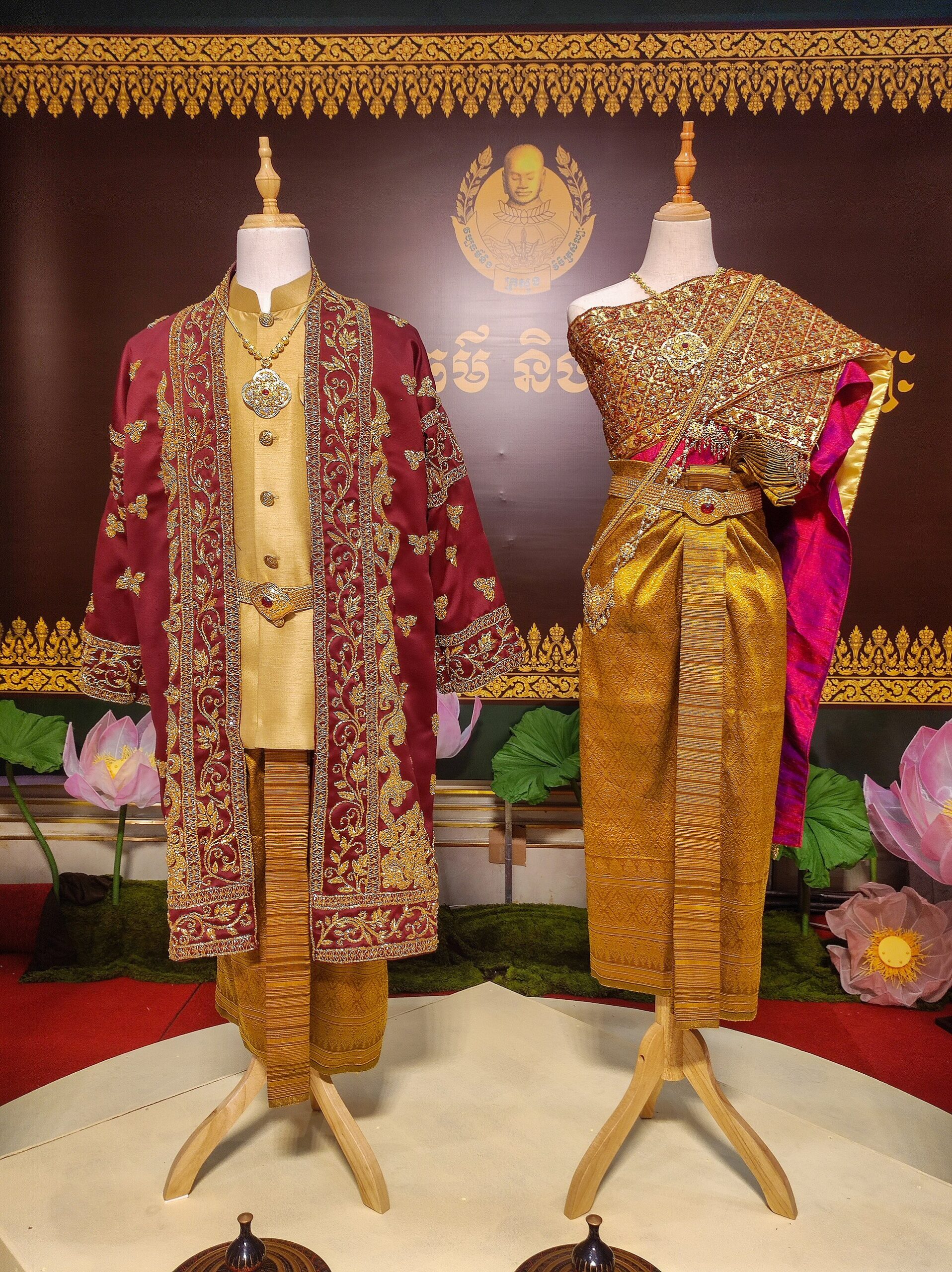
Cambodian wedding customs are made up of a series of rites: an engagement comes first, followed by hand-tying, hair cutting and circling the Popil, and after the wedding the couple visit a temple for monks’ teaching and blessings. Traditional weddings last three days, linked to the Buddhist view of three as an auspicious number. Also covered are the legendary origins of the rites, the wedding cake Num ansom, date taboos, the UNESCO nomination and the cost of attending a wedding.
Last updated: 3 November 2026
1. What rites make up Cambodian wedding customs, from engagement to temple blessing?
A traditional Khmer wedding is a series of rites: an engagement announces the relationship beforehand, the wedding includes hand-tying, hair cutting and circling the Popil, and afterwards the couple receive blessings at a temple.
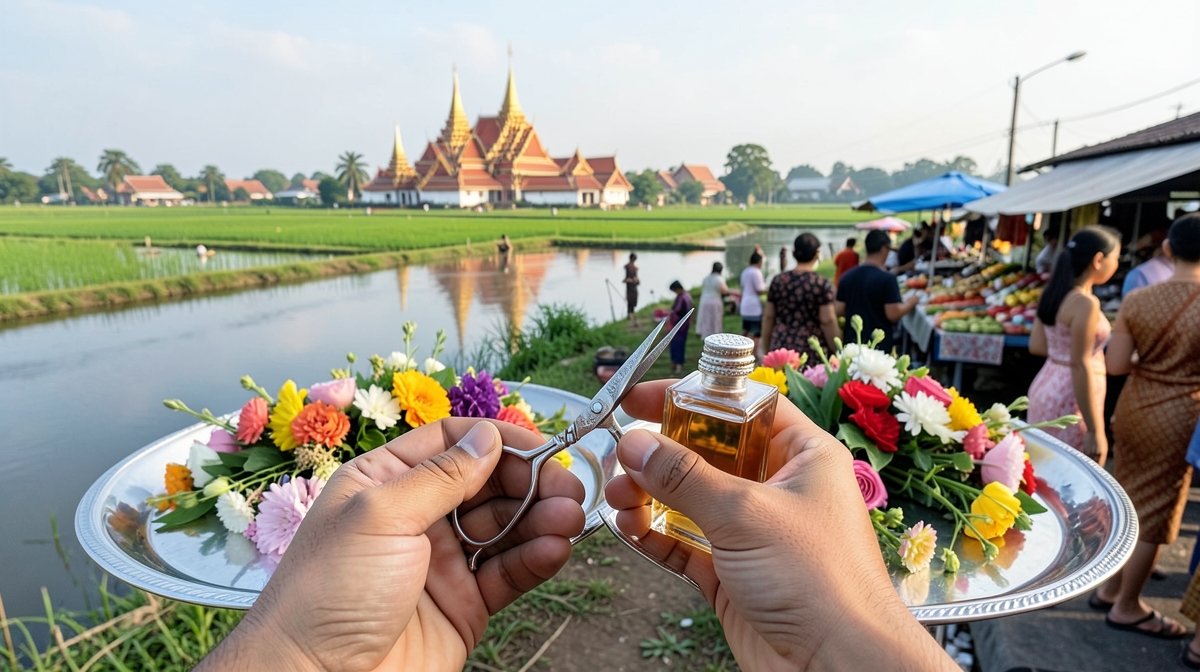
Circling candlelight and scattering areca flowers are two rites often mentioned in Khmer weddings. Yet the wedding does not begin there: Khmer history lecturer Sambo Manara said that traditionally an engagement ceremony is held before the wedding to publicly announce the relationship between bride and groom. For people working in Cambodia, attending a wedding also brings practical costs such as make-up and gift money, which are covered in the final section.
The hand-tying rite has a direct purpose: Sambo Manara said tying the hands signifies that the families recognise the marriage, which prevents outsiders from misunderstanding the couple’s marital status. One description notes that in the hair-cutting ceremony (Katsak) the couple’s hair is cut symbolically to mark the start of their new life together, after which both sets of parents and close relatives take turns cutting hair, sprinkling perfume and giving blessings. Another description notes that the "Bongvil Popil" rite of circling the Popil is also used at housewarmings, birthdays and other occasions, not only at weddings.
The rites do not end when the banquet does: Sambo Manara said that after the wedding the couple go to a temple to receive teaching and blessings from monks, a rite that is equally important (for more on the religious and daily-life background, see Cambodian Socio-Cultural Environment).
2. Why does a traditional Khmer wedding last three days?
A traditional Cambodian wedding lasts three days for a reason rooted in Buddhist belief: Cambodians regard three as an auspicious number, and the length of the celebration reflects that idea.
A 2010 report in The Phnom Penh Post stated that traditional Cambodian weddings last three days because, in Buddhist thinking, Cambodians regard three as a lucky number. Three days was not the original length either: one description notes that Khmer weddings once lasted as long as seven days before being shortened to three, and by the 1980s urban weddings usually took a day and a half.
The content of weddings is changing as well: wedding business owner Norng Monika said in the same 2010 report that cake cutting has become less common, with some couples turning to fruit decorations or a fruit-cutting rite. The days have become fewer and the details newer, yet many of the rites are thought to trace back to a founding legend.
3. Preah Thong and the naga princess: the legend behind the wedding rites
Many traditional Khmer wedding rites are believed to originate in the marriage of Preah Thong and the naga princess Neang Neak in the founding legend, while another account points to a bodhisattva’s wedding song.
Preah Thong and the naga princess Neang Neak are figures in Cambodia’s founding legend, and according to legend their marriage is the source of many Khmer wedding rites. Another account comes from wedding literature: one description notes that, according to Oknha Nov’s "Khmer Wedding Rules", ancient weddings featured a song telling how the bodhisattva Vesandor arranged marriages for his children Chealy and Kroesna. The first account appears in a Wikipedia entry and the second on a tourism information website, and the two coexist.
Performances at weddings have their own origins too: the coconut dance originated around 1960 in Romeas Haek district, Svay Rieng Province, and is performed in wedding processions and at festivals to lift the atmosphere, depicting affection between rural men and women. As for court dance, the Royal Ballet, also known as Khmer classical dance, has been associated with the Khmer court for more than a thousand years and was performed at royal ceremonies such as coronations, weddings, funerals and Khmer festivals.
4. Num ansom wedding cakes and the dates when weddings are avoided
Num ansom, a sticky rice cake, is an essential part of a traditional Khmer wedding, and one description notes that weddings traditionally avoid birthdays, religious holidays, eclipses and Khmer New Year.
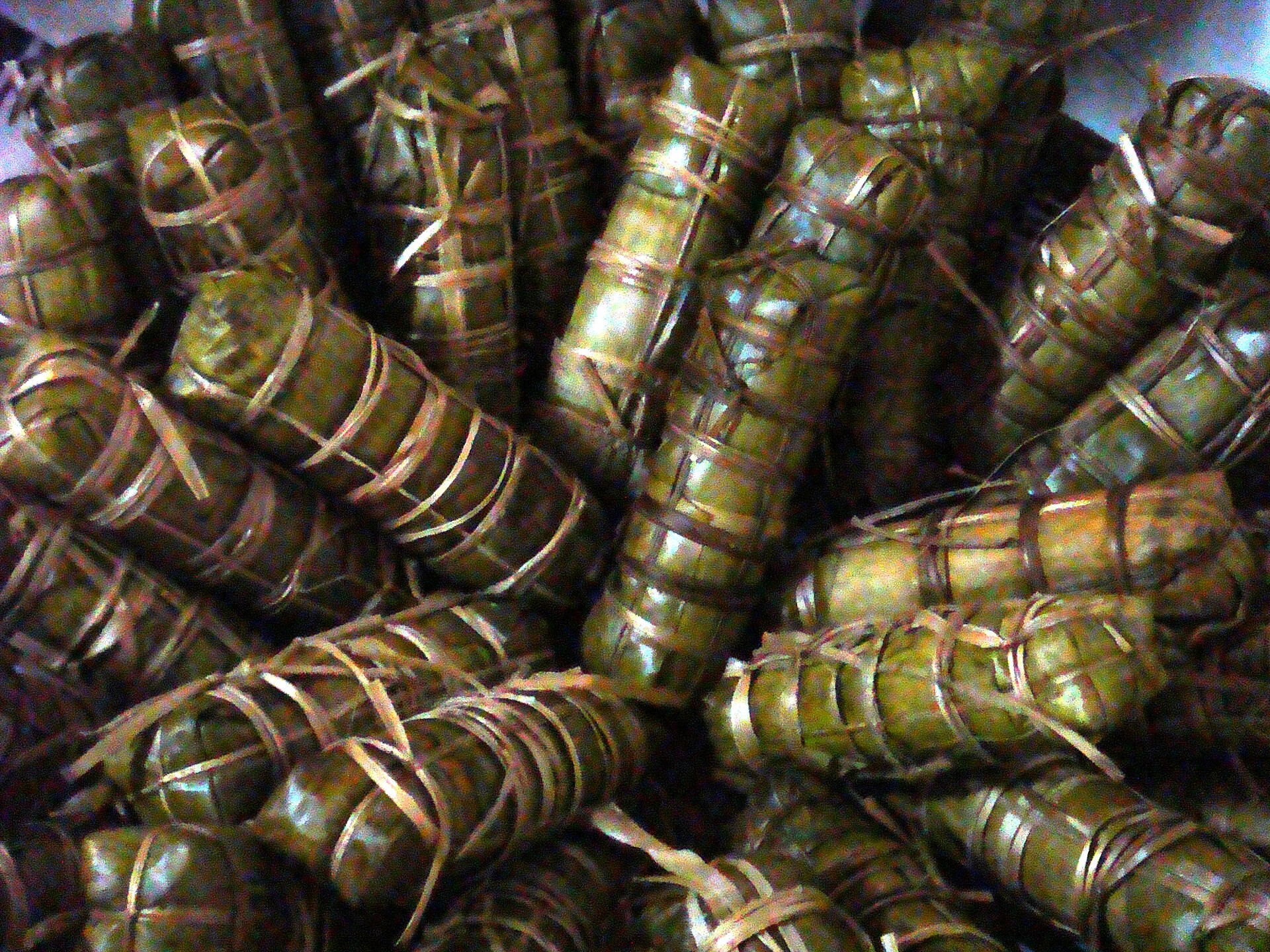
Num ansom is sticky rice wrapped in banana leaf, filled with banana (num ansom chek), jackfruit or pork, or with vegetarian fillings such as mung bean, and is steamed, fried or grilled depending on the occasion. The cake is traditionally eaten at the Festival of the Dead (Pchum Ben) and Khmer New Year, and is also a standard cake at weddings.
On choosing a date, one description cites researcher Nhean Phoeun: according to Khmer tradition, weddings may be held in only six months of the year, and only in months of 30 days. Another description notes that weddings should not be held on birthdays, religious holidays, solar or lunar eclipses, or during Khmer New Year; Khmer New Year holiday dates can be checked in Cambodia Public Holidays 2026.
5. Khmer wedding UNESCO nomination: the file has been submitted
Cambodia’s Ministry of Culture and Fine Arts has submitted the traditional Khmer wedding nomination file to UNESCO, and UNESCO’s Cambodia country page still lists it as a nomination in progress.
The Ministry of Culture and Fine Arts had planned to submit "Khmer wedding" to UNESCO by 31 March for inscription on the list of the intangible cultural heritage of humanity. Ministry official Siyonn Sophearith said the nomination would help people understand the meaning of the candle-circling rite and the scattering of areca flowers at weddings; he also said that once an application is submitted, UNESCO takes about two years to decide whether to inscribe it.
Ministry spokesman Sum Mab confirmed that the nomination file had been completed and sent to UNESCO, and he expected the New Year festival to be inscribed first, with the wedding the following year. Sum Mab said UNESCO’s Intergovernmental Committee reviews 40 to 60 nominations from member states each year. UNESCO’s Cambodia country page still lists the traditional Khmer wedding as a nomination in progress, and the outcome rests on UNESCO’s announcement.
6. Attending a wedding while working in Cambodia: costs and wedding services
According to a 2010 report, attending a Cambodian wedding cost at least 20 US dollars for make-up and 20 dollars in gift money, and rising demand brought more competitors into wedding services.
In a 2010 Phnom Penh Post report, interviewee Heng Sina said attending a wedding cost at least 20 US dollars for make-up and 20 dollars in gift money, while a dress cost 100 to 200 dollars and was worn only two or three times. In the same report, a staff member of the wedding service company Mungkul Serey said demand for wedding services had grown, and more new businesses had entered the market to compete.
Back to the candle-circling and areca flowers from the opening: these rites are held within three auspicious days, and they have become shorter and newer alongside city life. The coconut dance often seen in wedding processions originated in Svay Rieng Province.
Manhattan Special Economic Zone (MSEZ) is located in Bavet, Svay Rieng Province, about 6 km from the Bavet–Moc Bai border crossing with Vietnam, and its on-site one-stop government office handles investment approvals, customs clearance and certificates of origin. To learn about staffing and shipping arrangements for setting up a factory at MSEZ, please get in touch through the MSEZ contact form.
7. Frequently asked questions about Cambodian wedding customs
Q1: How many days does a traditional Cambodian wedding last?
Traditionally three days, because three is an auspicious number in Buddhist thinking; one description notes that weddings once lasted up to seven days, and by the 1980s urban weddings usually took a day and a half.
Q2: What does the hand-tying rite at a Cambodian wedding mean?
Khmer history lecturer Sambo Manara said the hand-tying rite signifies that the families recognise the marriage, which helps prevent outsiders from misunderstanding the couple’s marital status.
Q3: How much gift money do guests give at a Cambodian wedding?
In a 2010 report, one interviewee said attending a wedding cost at least 20 US dollars in gift money, plus another 20 dollars spent on make-up.
Q4: On which days are Cambodian weddings not held?
One description notes that, traditionally, weddings are not held on birthdays, religious holidays, solar or lunar eclipses, or during Khmer New Year, and are held only in months of 30 days.
Q5: Has the Khmer wedding been inscribed by UNESCO?
Not yet. The nomination file has been submitted to UNESCO, and the country page still lists it as a nomination in progress; an official said a decision takes about two years after submission.
References
- The Phnom Penh Post: UNESCO recognition sought for Khmer wedding ceremony | https://phnompenhpost.com/national/unesco-recognition-sought-for-khmer-wedding-ceremony/
- Sophatra blog, May 2016: Traditional Khmer Wedding (Part III) – The Hair Cutting Ceremony (Katsak) | https://sophatra.blogspot.com/2016/05/traditional-khmer-wedding-part-iii-hair.html
- TourismCambodia.com: Khmer Wedding | https://www.tourismcambodia.com/culture/art-and-culture/khmer-wedding.htm
- The Phnom Penh Post, 5 November 2010: The modernisation of Khmer weddings | https://phnompenhpost.com/lifestyle/modernisation-khmer-weddings/
- The Better Cambodia: Khmer Weddings Explained | https://thebettercambodia.com/khmer-weddings-explained-traditions-rituals-and-their-meanings/
- Wikipedia: Preah Thong and Neang Neak | https://en.wikipedia.org/wiki/Preah_Thong_and_Neang_Neak
- Wikipedia: Dance in Cambodia | https://en.wikipedia.org/wiki/Dance_in_Cambodia
- IntoCambodia: Robam Kuos Traloak (Coconut Dance) | https://intocambodia.org/content/robam-kuos-traloak-coconut-dance
- UNESCO: Royal Ballet of Cambodia | https://ich.unesco.org/en/RL/royal-ballet-of-cambodia-00060
- Wikipedia: Num ansom | https://en.wikipedia.org/wiki/Num_ansom
- The Phnom Penh Post: Cambodia moves to secure UNESCO recognition for Sangkran, traditional wedding ceremony | https://www.phnompenhpost.com/arts-culture/cambodia-moves-to-secure-unesco-recognition-for-sangkran-traditional-wedding-ceremony
- UNESCO: Cambodia country page (accessed 20 October 2026) | https://ich.unesco.org/en/state/cambodia-KH


